Appliance and Supply Hose Leaks in Thornton, CO
A burst washer hose, a dishwasher seal or a cracked ice maker tube can soak floors and cabinets quickly, or leak slowly for weeks. The restoration team extracts the water and dries what it reached in Thornton homes.
(888) 532-8620Appliance leak? Get it dried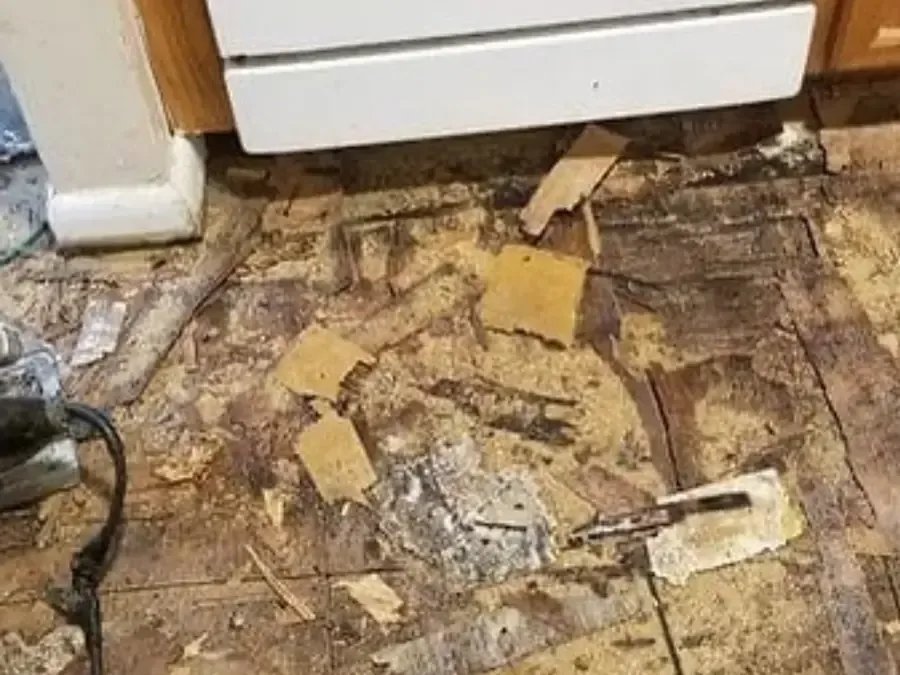
What a proper appliance and supply hose leaks job takes in Thornton
Find slow leaks fast
Meters and thermal imaging find water under cabinets and flooring that has no stain yet, which is where slow appliance leaks hide in Thornton kitchens.
Dry inside the cabinets
Toe kicks come off and air is pushed under the cabinet base, so the subfloor dries without tearing out the kitchen.
Category matters
A supply hose is clean water, but a washer or dishwasher drain is gray water, so the cleaning steps change.
Hardwood gets special care
Drying mats and dehumidifiers pull water out of hardwood slowly to limit cupping, and readings track every board.
What to do right now about appliance and supply hose leaks
- Turn off the appliance valve. Close the shutoff behind the washer, under the sink or behind the fridge, or the main if the valve will not turn.
- Unplug if it is dry to reach. Unplug the appliance only if the outlet and floor around it are dry; otherwise shut off the breaker first.
- Mop and lift. Mop up surface water, pull rugs and move items out of the lower cabinets so they stop wicking.
- Photograph the failed part. Take photos of the hose, seal or tube that failed and keep it for the plumber and adjuster.
What does appliance and supply hose leaks cost in Thornton, CO?
Appliance leak cleanup usually runs $700 to $2,000 for a kitchen or laundry floor caught early, and $2,000 to $5,000 when water got under cabinets or reached the room below. Slow leaks that ran for weeks can run $5,000 to $10,000.
Caught early
- Washer or fridge leak on a hard floor
- Extraction and floor drying
- Clean supply water
Under cabinets or below
- Water under toe kicks or a ceiling below
- Cabinet bases vented and dried
- Daily readings to dry
Slow leak for weeks
- Hidden leak behind or under an appliance
- Flooring and cabinet bases removed
- Extended drying and documentation
What moves the number most:
- The water category: clean, gray or black water
- Square footage and how many levels got wet
- Material class: carpet, drywall, hardwood or a concrete slab
- How many hours passed before drying started
Ranges are typical, not a quote. The water damage cost calculator gives a closer range for your own rooms.
Appliance and Supply Hose Leaks, step by step
On every Thornton job, moisture gets mapped before any equipment goes down, and the equipment stays until the readings say dry.
Shut off and trace
The response team closes the appliance valve, traces how far the water traveled with meters and thermal imaging, and photographs the failed part.
Extract and lift
Standing water is extracted, rugs and lower cabinet contents are moved, and toe kicks come off so the cabinet base can be reached.
Clean if it was drain water
Gray water from a washer or dishwasher drain gets an antimicrobial cleaning on the subfloor and cabinet bases before drying.
Dry floors and cabinets
Air movers, dehumidifiers and hardwood drying mats run, and readings are logged every day until the floor and cabinets read dry.
Appliance leaks come in two kinds. A burst washer hose or a toilet supply that pops off pours water fast and gets noticed. A dishwasher seal, a refrigerator ice maker tube or a cracked drain pan drips for weeks under cabinets and flooring before anyone sees a stain.
The usual appliance leak sources in Thornton
Rubber washer hoses age and burst, especially on a second-floor laundry. Dishwasher door seals, drain hoses and supply connections leak under the kitchen cabinets. Refrigerator ice maker tubes crack behind the fridge. Toilet supply hoses and fill valves fail without warning. Whether the laundry sits upstairs in a two-story house near Eastlake or Larkridge or in the basement of a 1950s home off Washington Street, a washer leak heads for the lowest point it can reach.
- Washer supply and drain hoses
- Dishwasher seals and drain hoses
- Refrigerator ice maker tubes
- Toilet supply hoses and fill valves
Gray water from drains
Clean water from a supply hose is Category 1. Water from a washer drain, a dishwasher drain or a sink is gray water and carries soap, food and dirt, so carpet pad comes out and surfaces get an antimicrobial before drying. A slow leak that sat for weeks can degrade further and often needs more removal.
- Supply hose leaks are clean Category 1 water
- Washer and dishwasher drain water is gray water
- Leaks that sat for weeks need more removal
Washer hose burst or water under the dishwasher? Close the appliance valve, unplug only if it is dry to reach, and call; the crew dries the cabinets too.
(888) 532-8620Get the appliance leak driedDrying cabinets and floors
Water runs under the cabinet toe kicks and sits under laminate, vinyl plank and hardwood. The crew pulls the toe kicks, drills small vent holes or removes the cabinet base if needed, and uses drying mats on hardwood. The EPA WaterSense leak checklist helps spot slow leaks early, and the Consumer Product Safety Commission posts appliance recalls.
Appliance and supply hose leaks across the city and nearby Adams County
Dispatch runs day and night, and the restoration team works every neighborhood listed on the service area page.
Crews cover ZIP 80241 and the rest of the city, from the 1950s homes off Washington Street up past Larkridge and Thorncreek to the streets around Eastlake and East 160th Avenue.
Nearby coverage reaches Northglenn, Federal Heights, Westminster, Broomfield, Commerce City, Brighton and Todd Creek.
Related water damage services in Thornton
Appliance and Supply Hose Leaks questions, answered
Water still coming in?
Hose burst or a slow leak found? The restoration team dries cabinets and floors around the clock.
(888) 532-8620 Report the washer hose burstHow do appliance leaks cause so much damage in Thornton homes?
A burst washer hose can release a lot of water quickly, and slow leaks under dishwashers and refrigerators can run for weeks under cabinets and flooring before anyone sees them.
Do the kitchen cabinets have to come out?
Usually not. Pulling the toe kicks and drilling small vent holes lets air reach the subfloor under the cabinet base. Cabinets with swollen particleboard bases sometimes have to be replaced.
Can hardwood floors be saved after a leak?
Often, if drying starts quickly. Hardwood drying mats and dehumidifiers pull water out slowly to limit cupping. Boards that buckled badly or stayed wet for weeks may need replacement.
Is washer water clean or dirty?
Water from the supply hose is clean. Water from the drain hose or the tub is gray water with soap and dirt, so pad comes out and surfaces are cleaned with an antimicrobial.
Does insurance cover appliance leaks?
Sudden leaks such as a burst hose are often covered. Slow leaks that ran for weeks may be excluded. Coverage depends on your policy, so check with your own insurer.
How long does drying take after an appliance leak?
A floor caught early often dries in two to four days. Water under cabinets, in hardwood or in a ceiling below takes longer. Mold can take hold in 24 to 48 hours in hidden spaces, so drying starts right away.
How can appliance leaks be prevented?
Replace rubber washer hoses with braided ones, check under the sink and dishwasher a few times a year, use a leak alarm behind the washer and fridge, and close the washer valves when away.
Appliance leak in Thornton? Dry the cabinets and floor
Water under cabinets and flooring keeps spreading out of sight. Dispatch runs 24/7.
(888) 532-8620Start the appliance leak dry-out