Sewage Backup Cleanup in Thornton, CO
Sewage that backs up through a basement floor drain or a toilet is Category 3 from the first minute. In Thornton, the response team contains it, removes what it touched and disinfects before drying begins.
(888) 532-8620Drain backing up? Call now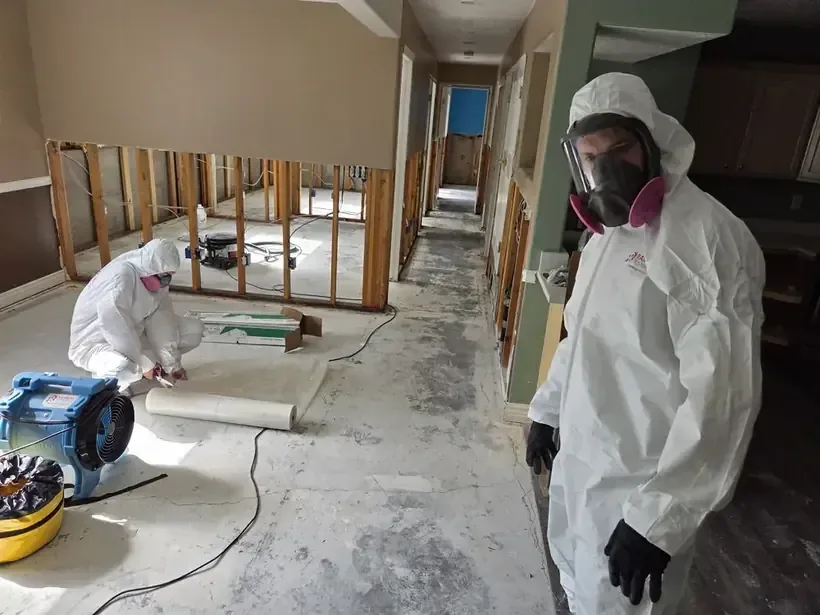
What a proper sewage backup cleanup job takes in Thornton
Category 3 from minute one
Sewage carries pathogens the moment it backs up, so the response team treats the whole affected area of a Thornton home as contaminated from the start.
Containment and protective gear
Plastic barriers, negative air where needed, respirators and boots keep the contamination in the basement and off the rest of the house.
Remove, do not dry
Carpet, pad, drywall and insulation touched by sewage come out and are bagged, because drying them would leave the contamination behind.
Disinfect at dwell time
An EPA-registered antimicrobial stays on hard surfaces for its full labeled dwell time before drying equipment ever runs.
What to do right now about sewage backup cleanup
- Stop using water. Do not flush, shower or run the washer or dishwasher; every gallon used upstairs can come back out of the floor drain.
- Keep people and pets out. Close off the basement, keep children and pets away and do not walk through the water in household shoes.
- Avoid fans and vacuums. A household fan or shop vacuum spreads contaminated droplets; leave extraction to crews in protective gear.
- Photograph and wash up. Photograph the drain and the water level from a dry spot, and wash with soap and water after any contact.
What does sewage backup cleanup cost in Thornton, CO?
Sewage backup cleanup usually runs $2,000 to $5,000 for a contained backup on an unfinished floor, and $5,000 to $12,000 for a finished basement. Large backups that reached several rooms can run $12,000 to $25,000.
Contained backup
- Floor drain backup on concrete
- Extraction, cleaning and antimicrobial
- Protective gear and containment
Finished basement
- Carpet, pad and drywall removed
- Contents bagged or listed
- Disinfection then several days of drying
Large backup
- Several rooms or a full level
- Negative air and full containment
- Extended removal and drying
What moves the number most:
- The water category: clean, gray or black water
- Square footage and how many levels got wet
- Material class: carpet, drywall, hardwood or a concrete slab
- How many hours passed before drying started
Ranges are typical, not a quote. The water damage cost calculator gives a closer range for your own rooms.
Sewage Backup Cleanup, step by step
On every Thornton job, moisture gets mapped before any equipment goes down, and the equipment stays until the readings say dry.
Contain and protect
The response team sets containment at the basement stairs, puts on respirators, gloves and boots, and confirms the house is not using water.
Extract the sewage
Category 3 water is extracted with dedicated equipment, and solids are removed and bagged before any surface is cleaned.
Remove and disinfect
Porous materials above the waterline come out, and hard surfaces get an EPA-registered antimicrobial left on for its full dwell time.
Dry and verify
Air movers and dehumidifiers dry the cleaned slab and framing, and readings plus photos of each stage go into the claim file.
A sewer backup is not a water leak with a smell. It carries bacteria and viruses, so every step is about keeping it from spreading: containment, protective gear, removal of porous materials and disinfection before any drying equipment runs.
Where Thornton backups come from
In a house with a basement, the floor drain is the lowest opening on the sewer, so a blockage in the lateral or a surcharged city main shows up there first. Roots, grease, wipes and old clay or cast iron pipe narrow the lateral over time, and the oldest laterals in the 1950s homes off Washington Street have had the longest to wear. Big Dry Creek carries the treated wastewater from the city and its neighbors toward the South Platte, but most backups start in the pipe between the house and the main.
- Basement floor drains
- Lowest toilets, tubs and showers
- Laundry standpipes
- Cleanouts with a missing or loose cap
What has to come out
Porous materials touched by sewage are removed, not dried: carpet and pad, drywall above the waterline, insulation, particleboard and upholstered items. Hard surfaces such as concrete, tile and sealed wood are cleaned and treated with an EPA-registered antimicrobial left on for its full dwell time. The crew wears gloves, boots, eye protection and respirators, and sets containment so the rest of the house stays clean.
- Carpet, pad and drywall above the waterline
- Insulation, particleboard and upholstered items
- Anything porous that cannot be disinfected
Sewage coming up through the basement drain? Stop running water upstairs, keep everyone out of the area, and call; the crew arrives in protective gear.
(888) 532-8620Report the drain backup tonightDrying after disinfection
Drying starts only after removal and cleaning, so the equipment does not spread contamination. The EPA indoor air quality pages explain why damp, contaminated materials should not stay in a home, and OSHA sets the protective gear standards crews follow on contaminated jobs.
Sewage backup cleanup across the city and nearby Adams County
Dispatch runs day and night, and the restoration team works every neighborhood listed on the service area page.
Crews cover ZIP 80241 and the rest of the city, from the 1950s homes off Washington Street up past Larkridge and Thorncreek to the streets around Eastlake and East 160th Avenue.
Nearby coverage reaches Northglenn, Federal Heights, Westminster, Broomfield, Commerce City, Brighton and Todd Creek.
Related water damage services in Thornton
Sewage Backup Cleanup questions, answered
Water still coming in?
Sewage on the floor? The response team works in protective gear around the clock.
(888) 532-8620 Floor drain overflowing? CallWhy is sewage cleanup different from a water leak?
Sewage is Category 3 water: it carries bacteria and viruses from the start. Porous materials it touched are removed instead of dried, surfaces are disinfected with an EPA-registered antimicrobial and the crew works in protective gear with containment.
Why did sewage come up through a Thornton basement floor drain?
The floor drain is usually the lowest opening on the house sewer, so a blockage in the lateral or a backed-up main empties there first. Roots, grease, wipes and old clay or cast iron pipe are common causes.
Can carpet be cleaned after a sewage backup?
No. Carpet and pad touched by sewage are removed and bagged. Hard flooring such as tile and sealed concrete can be cleaned and disinfected, and some sealed wood can be saved if the exposure was short.
Is it safe to stay in the house?
Usually, if the affected area is closed off and nobody enters it without protection. Keep children, pets and anyone with a weak immune system away until the cleanup and disinfection are finished.
Does insurance cover a sewer backup?
Many homeowners policies exclude sewer and drain backup unless a separate rider was added. Coverage depends on your policy, so check with your own insurer before the work is approved.
Who clears the sewer pipe?
A plumber or drain service clears the lateral and can camera it. The restoration team handles the cleanup inside, and both reports belong in the claim file.
How long does sewage cleanup take?
Removal and disinfection often take a day or two, and drying follows for several more. A finished basement takes longer than a concrete floor. Mold can take hold in 24 to 48 hours, so the work starts right away.
Sewer backup in Thornton? Get it contained tonight
Category 3 water spreads with every footstep and every flush. Dispatch runs 24/7.
(888) 532-8620Contain the backup now