Water Damage Restoration Englewood, CO
Trained technicians remove standing water, open wet materials and run drying equipment in older houses, apartment buildings and commercial spaces just south of Denver, then document each step for the insurance file.
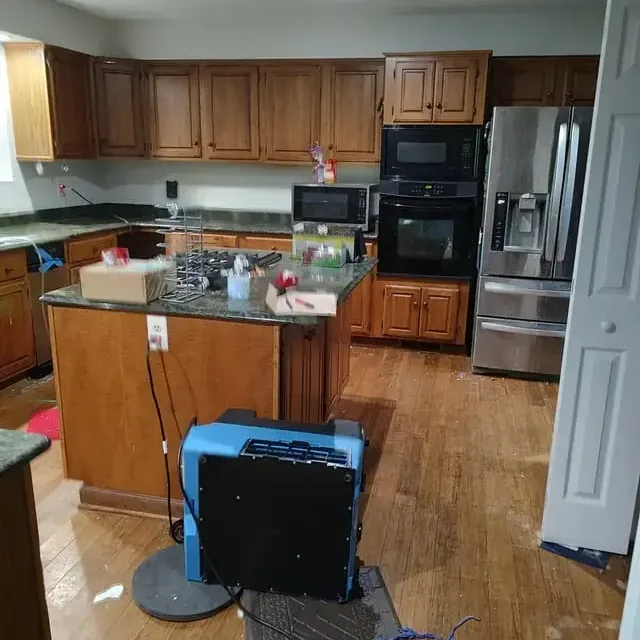 Drying in progress
Water Damage Restoration Services in Englewood, CO
Each service below covers one common source of indoor water, from a split supply pipe to a failed sump pump to a storm that finds the weak spot in a roof.
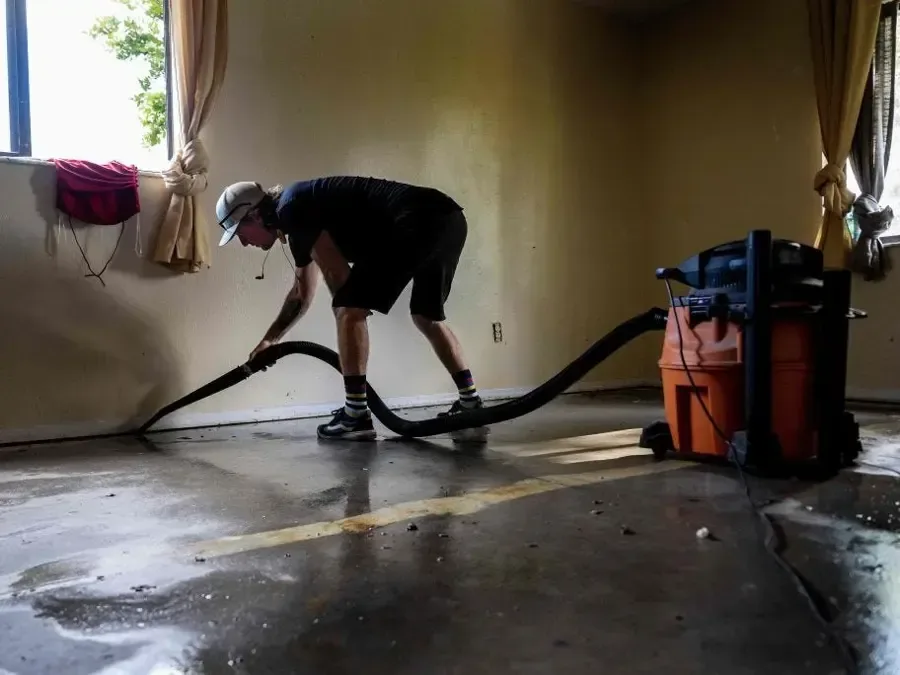 01Water Extraction and RemovalPumps and extractors clear standing water from floors before it climbs into walls and subfloors.View service
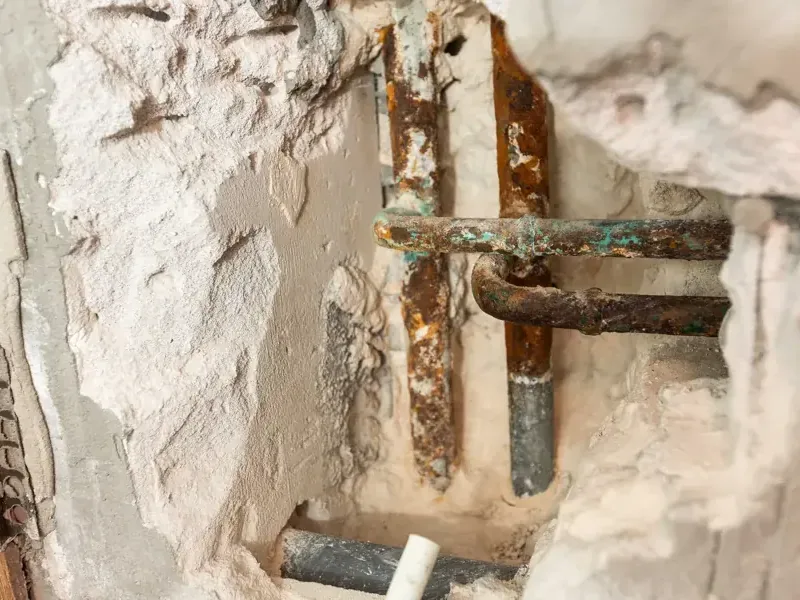 02Burst Pipe Water DamageSplit supply pipes are shut off, wet drywall is opened, and drying starts on every soaked layer.View service
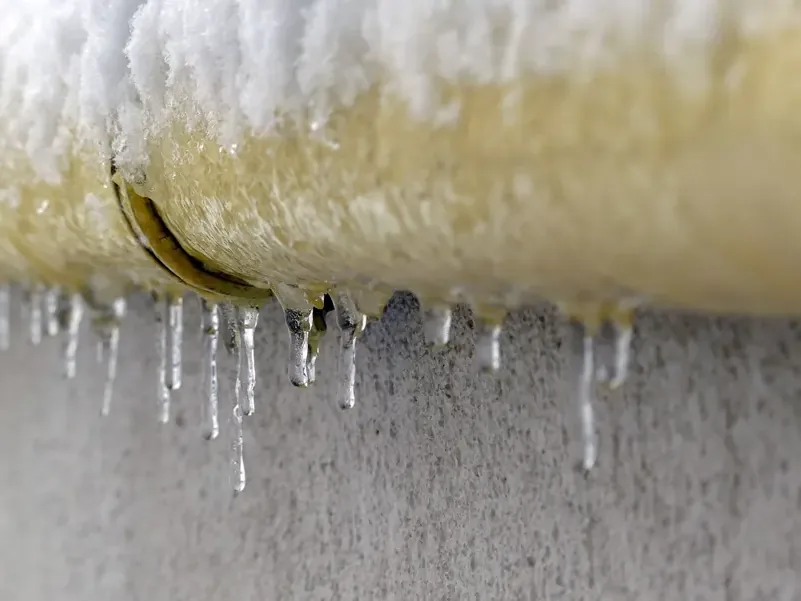 03Frozen Pipe Water DamagePipes split by winter freezes leave hidden wet walls, so the thaw damage is traced and dried.View service
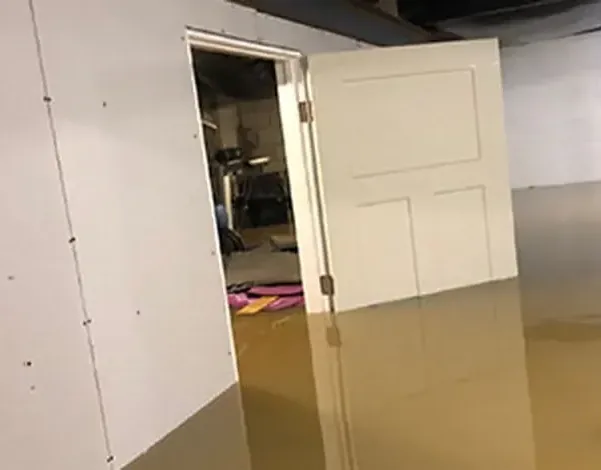
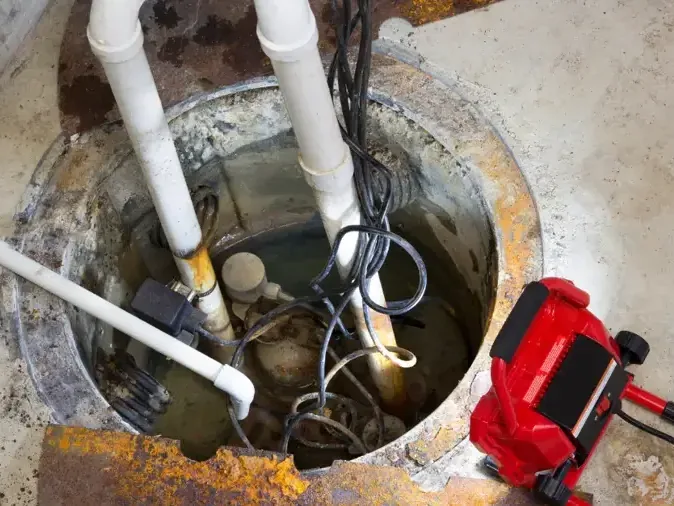 04Basement Flooding CleanupRainwater, groundwater and seepage in a lower level are pumped out and the structure is dried.View service
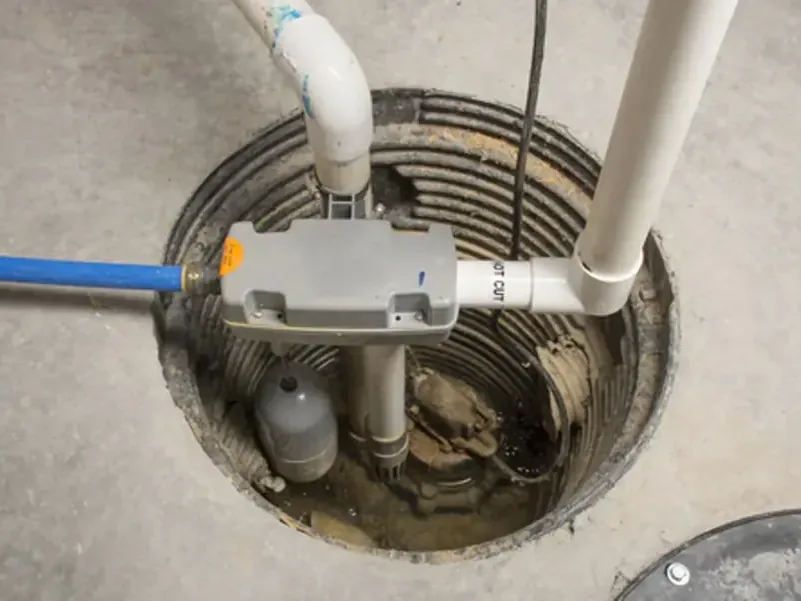 05Sump Pump Failure CleanupWhen a sump pump stops, groundwater and runoff reach the floor, and cleanup follows the water.View service
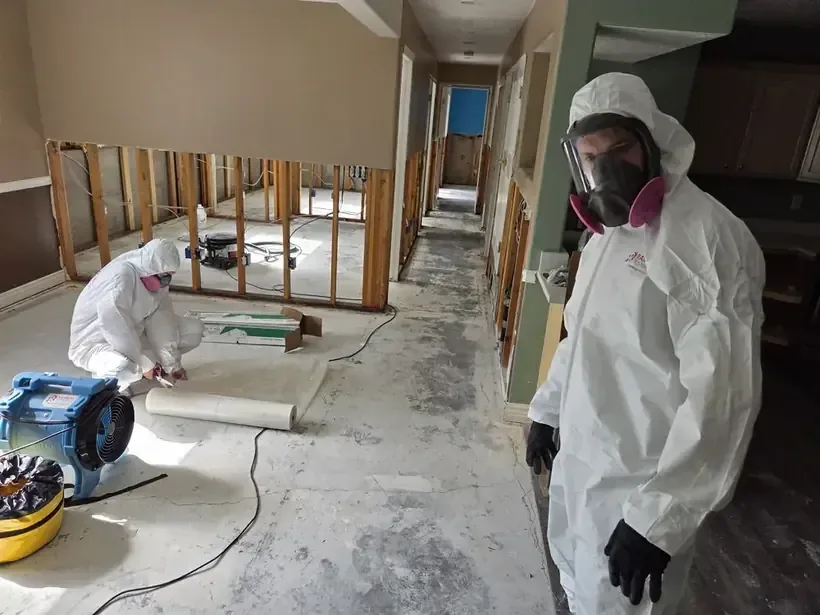 06Sewage Backup CleanupBacked-up wastewater is a health hazard, so affected materials are removed and surfaces sanitized.View service
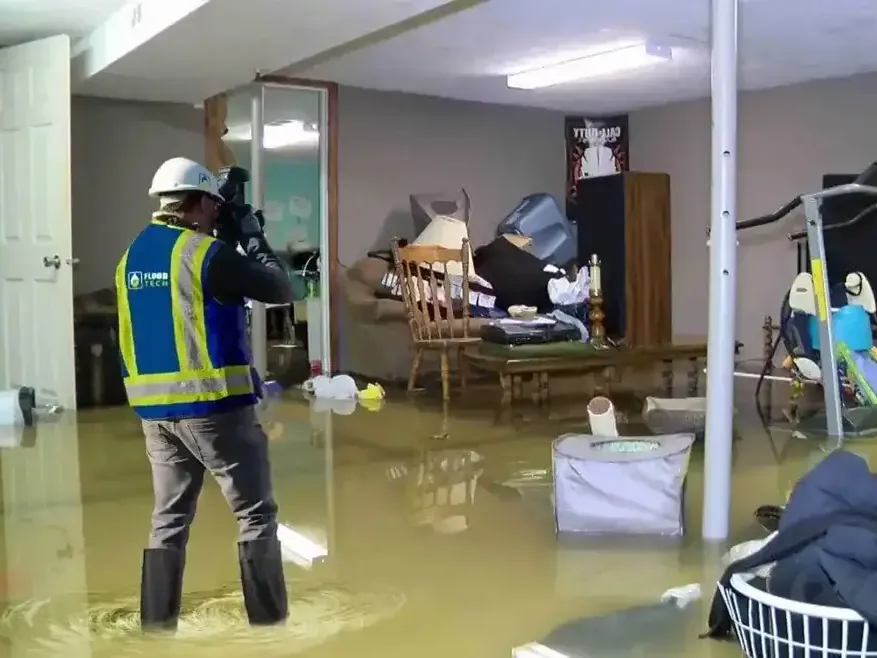 07Storm Water and Flash Flood CleanupHeavy rain that overwhelms drains and doorways is pumped out and exposed materials are dried.View service
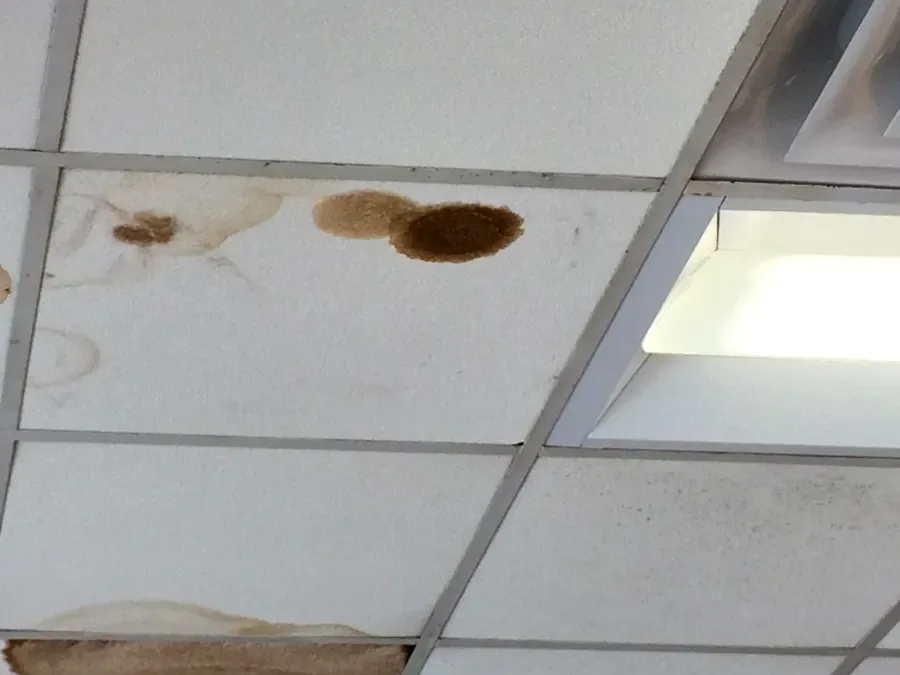 08Roof Leak Water DamageStorm water through a worn roof is traced to its entry point, then wet insulation and ceilings are dried.View service
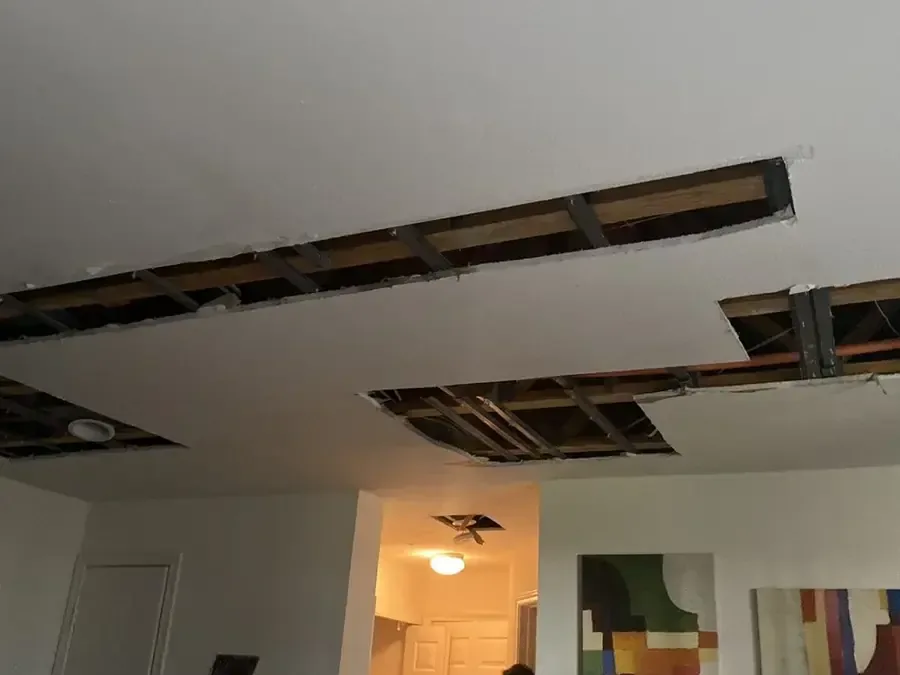 09Ceiling Leak Water DamageStained or sagging ceilings are opened where needed so trapped water can dry from above and behind.View service
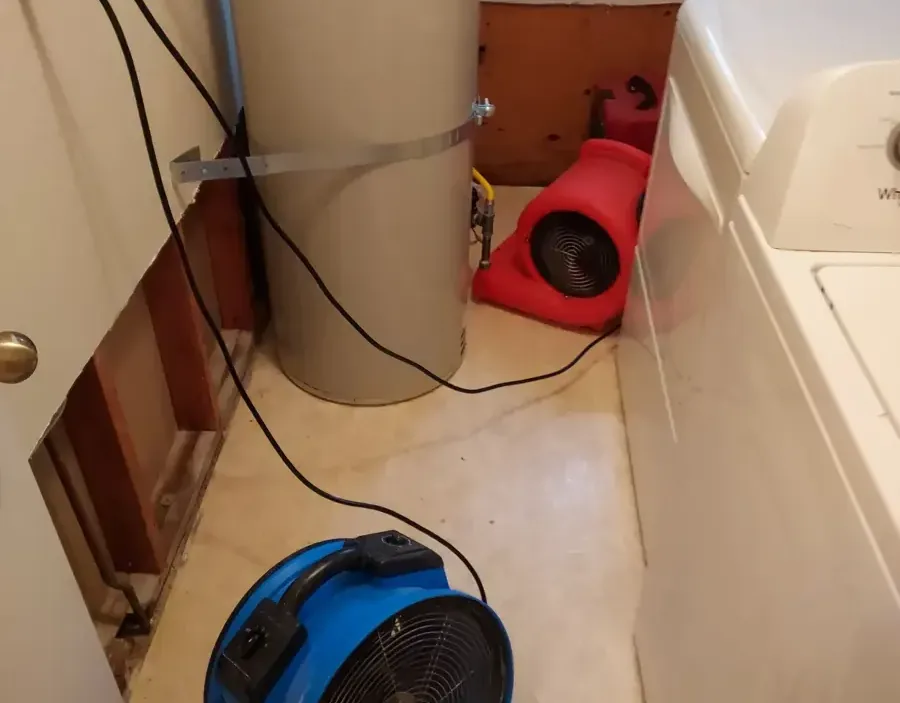
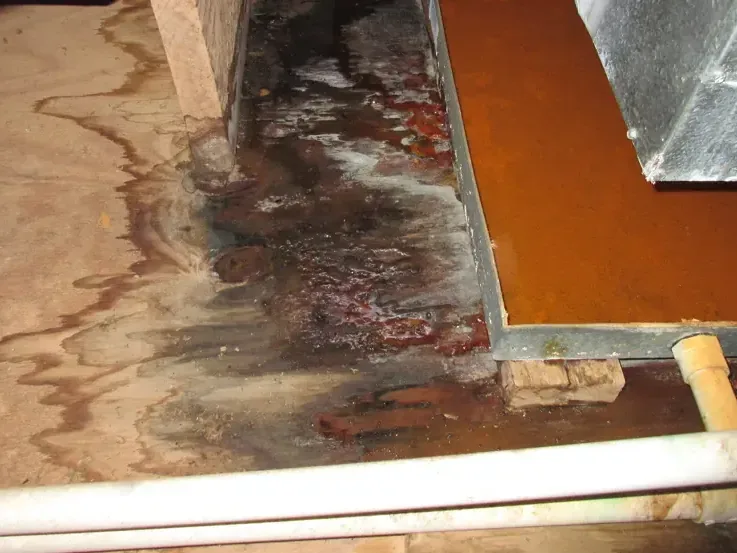 10Water Heater Leak CleanupA failed tank can soak floors and walls in an afternoon, so standing water is removed and the area dried.View service
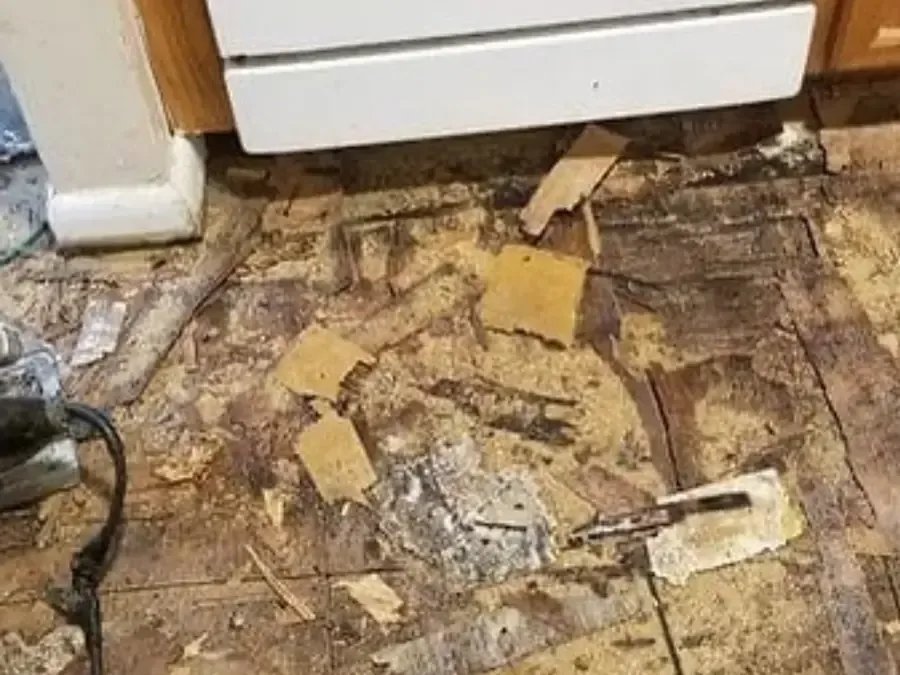 11Appliance and Supply Hose LeaksWashers, dishwashers and supply hoses leak behind and beneath, and the hidden damage is found and dried.View service
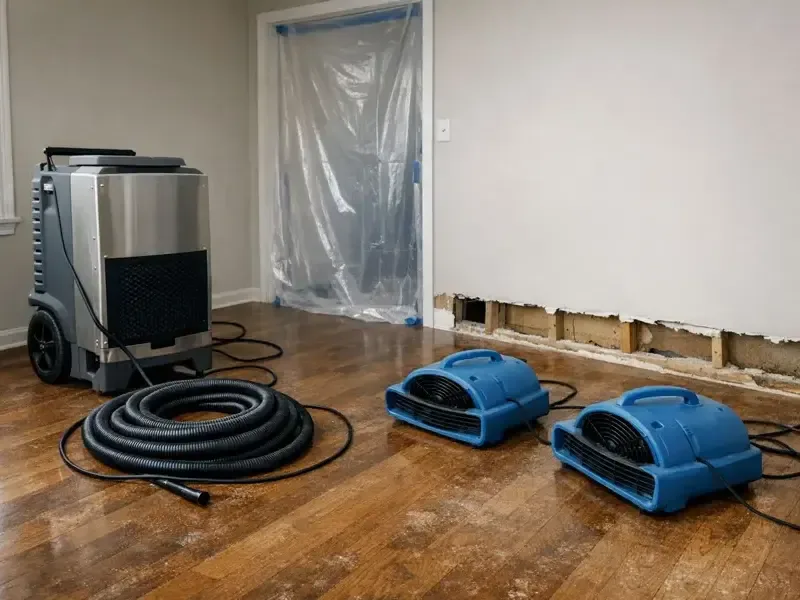 12Structural Drying and DehumidificationDehumidifiers and air movers dry framing, subfloors and walls to measured targets, not by appearance.View service
What to do in the first moments of water damage
- Stop the source. Close the main water valve for a pipe or appliance leak, and keep everyone away from standing water near outlets, cords and power strips.
- Protect the room. Lift furniture, rugs and electronics out of the wet area, and prop up upholstery so the legs do not stain or swell.
- Photograph the damage. Take wide and close photos of wet floors, walls, ceilings and belongings before anything is moved or thrown out.
- Keep wet items. Set aside soaked belongings instead of discarding them, since an adjuster may want to see what was lost.
- Call for help. Phone a restoration crew, describe the water and its source, and ask what happens next so extraction and drying can be set up.
How a water damage job moves from wet to dry
Every job follows the same four-part sequence, adjusted for the building and the water category, so nothing is skipped between the first pump and the final reading.
Inspect and map
The crew finds the source, confirms the water type, and maps moisture through floors, walls and ceilings with meters and a thermal camera.
Extract and clear
Standing water is pumped out, and soaked padding and ruined materials are removed so the structure can start releasing moisture.
Dry the structure
Air movers and dehumidifiers run on a setup matched to the room, and readings are logged at each visit until targets are met.
Verify and document
Final readings confirm the materials reached a dry standard, and the photos and logs go into the claim file.
Water damage dried to the IICRC S500 standard
Measured, not guessed
Moisture meters and thermal imaging set a drying goal for each material, so wet drywall is never mistaken for dry drywall because it looks fine.
Category-based cleanup
Clean, gray and black water each get a different response, from simple drying to full removal and sanitizing of porous materials.
Written drying records
Daily readings, equipment placement and photos are logged so both the repair and the insurance claim rest on solid paperwork.
What the standard covers
The S500 standard is the written benchmark for professional water damage work, and drying counts as complete only when measured moisture matches a dry reference reading.
All water damage categories covered in Englewood, CO
Clean water
A split supply pipe or failed fitting releases clean water, and early drying keeps it from degrading into something worse inside the walls.
Gray water
Washers, dishwashers and tub drains send used water into floors and cabinets, which calls for careful drying plus cleaning of affected surfaces.
Black water
Sewage and contaminated flood water carry bacteria, so porous materials come out and every exposed surface is cleaned and sanitized.
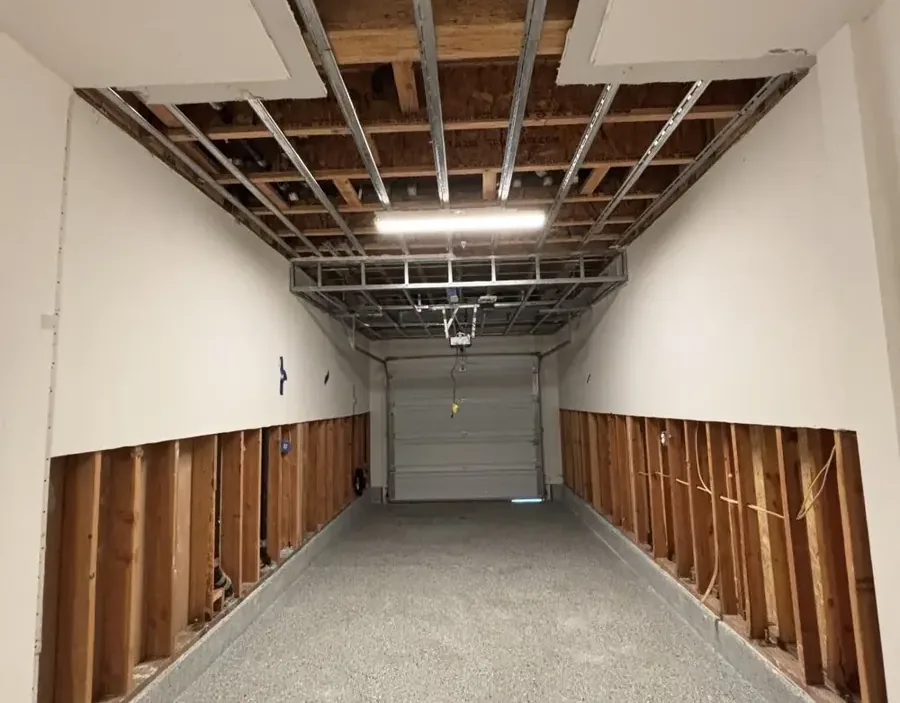
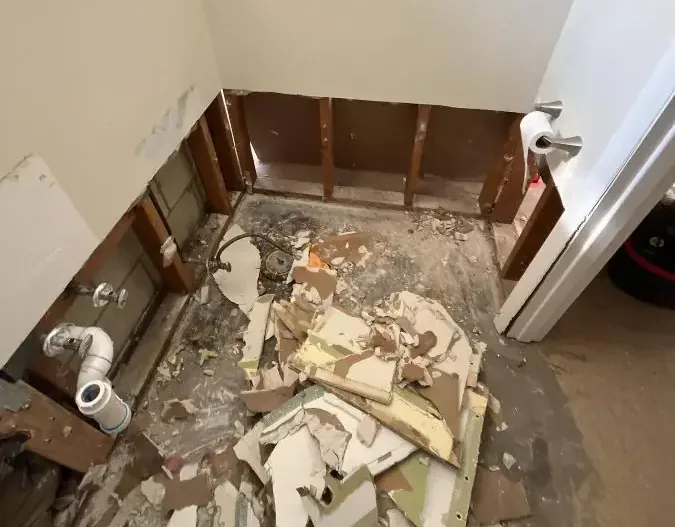
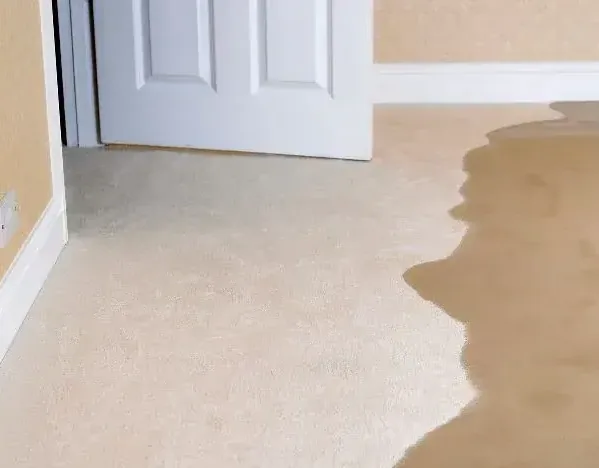
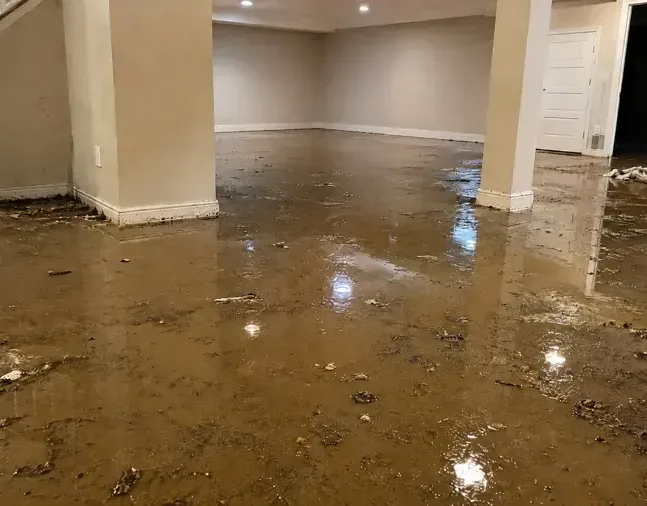
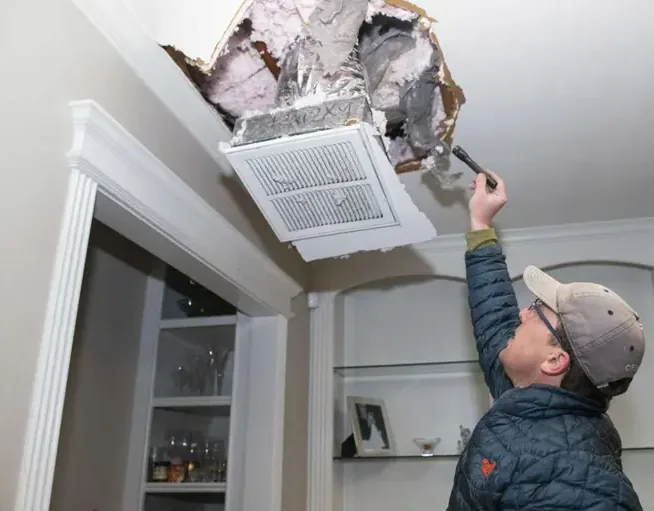
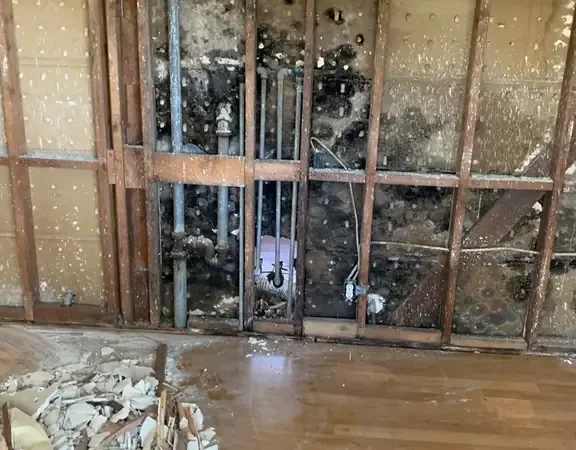
What a water damage dry-out looks like in Englewood
What does water damage restoration cost in Englewood, CO?
Most jobs in Englewood land between $1,200 and $20,000, depending on how much area is wet, how long the water sat, and whether it was clean, gray or black water. Room count matters too.
Contained loss
- One or two rooms affected
- Clean water caught early
- Extraction and basic drying with meter logs
Multi-room loss
- Several rooms or a full floor
- Wall and ceiling openings cut
- Longer equipment runs with readings
Severe or contaminated loss
- Sewage or deep flooding
- Heavy material removal and cleaning
- Extended drying program with logs
Documentation for your insurance claim
Strong records make a claim smoother, and a restoration crew can supply most of what an adjuster asks for when the loss is documented from the start.
- Dated photos of every wet room and surface
- A list of damaged belongings
- Moisture readings and drying logs
- Plumber or repair receipts
- Claim number and adjuster contact
Policies differ on sudden versus gradual water, on sewer backup add-ons, and on flood versus plumbing sources, so reading the declarations page before the adjuster visit helps. The restoration team documents the loss, but the carrier decides coverage.
Deductibles and the cause of the loss affect what a homeowner owes after the deductible, so a written estimate after the on-site inspection gives the real figure.
Water damage restoration across Englewood and nearby areas
Crews reach homes and apartments throughout the city, from Hampden Hills to the Rotolo Park area and the hospital district.
ZIP codes served
The Englewood name covers ZIP codes 80110, 80111, 80112 and 80113, and some of them extend beyond the city limits.
Homes and parks
Civic core
Nearby cities
What drives water damage in Englewood homes
Englewood sits just south of Denver in the South Platte River Valley, and its mix of older houses, apartment complexes and storm drainage projects shapes the water problems crews meet most often. Each factor below affects how a loss starts.
Older northwest housing
The northwest section is the oldest part of the city, with housing dating to the 1910s, so aging supply pipes and tired roofs are common sources of leaks.
Built up by 1960
Most of the city was built up by 1960 after a building boom, which means decades of wear on plumbing, roofs and drains in many homes.
Hampden Hills apartments
Hampden Hills holds one of the largest groups of apartment complexes in the metro, so a leak in one unit can reach ceilings and walls in the next.
Storm drainage upgrades
Heavy rain runoff in the South Englewood drainage basin led to the $23 million South Englewood Flood Reduction Project around Rotolo Park and South Navajo Street.
Colorado winter freezes
Colorado winters are notorious for severe freezing weather, and unprotected water pipes in unheated areas can freeze, split and flood a house once they thaw.
Sewage and wastewater
Wastewater flows to the South Platte Renew treatment plant, but a backup inside a house is a plumbing problem that needs professional cleanup.
Englewood Water Damage Questions
Still have a question?
Describe the water to a technician and hear how extraction, drying and the next steps would work for the building.
(888) 532-8620 Ask a drying technicianHow much does water damage restoration cost in Englewood?
Most jobs run between $1,200 and $20,000. A single wet room sits at the low end, while multi-room losses, sewage and long-running leaks climb higher. A written estimate after an inspection gives the exact number for the building.
What should be done first after a pipe bursts?
Shut off the main water valve, stay clear of wet electrical areas, photograph the damage, and call a restoration crew to extract water and open wet materials. Standing water near outlets should be treated as a shock hazard until the power is off.
Does the crew handle apartment leaks?
Yes. Apartment losses involve checking the unit below and shared walls, so the moisture map covers neighboring spaces and not only the room where water first appeared. Building managers and carriers receive the same readings and photos.
How long does drying take?
It depends on the materials, the amount of water and the conditions in the building. The crew returns to read the meters and stops only when the readings reach target. A larger loss or denser materials naturally take longer than a single wet room.
Is a sewage backup handled differently?
Yes. Sewage is black water, so porous materials like carpet and drywall are removed, and the remaining surfaces are cleaned and sanitized before any drying begins. Crews wear protective gear, and a plumber clears the blockage; see sewage backup cleanup.
Can wet drywall and carpet be saved?
Clean water caught early often leaves drywall and carpet salvageable, while padding and anything touched by contaminated water is usually replaced. Padding and anything touched by contaminated water is usually replaced instead.
Will insurance cover the work?
Coverage depends on the policy and the cause. Sudden events such as a burst pipe are often covered, and the photos and readings the crew records support the claim. Photos, readings and invoices all belong in the claim file.
Do winter freezes cause many pipe failures?
Colorado winters are notorious for severe freezing, and unprotected pipes in unheated areas are the usual trouble spots once the thaw begins. Pipes in garages, utility rooms and exterior walls are the usual weak spots; see frozen pipe water damage.
Which areas does the crew cover?
Work reaches all of the city and ZIP codes 80110, 80111, 80112 and 80113, from the northwest streets to Hampden Hills and the hospital district. Each service page lists the same coverage details.
When should a homeowner call?
As soon as water is noticed. Every hour of delay lets moisture spread into framing, so a call at any hour to describe the situation is the best first move. The call itself takes only a moment, and it starts the plan.
Water in the house? Start the dry-out with one call
A technician can talk through the situation, explain what extraction and drying involve, and set up the next step for the property.
(888) 532-8620Call about the water damage