A leaking tank can put water across a utility room and into the next room before anyone notices. In Brighton the repair also touches a city permit rule, and the water cleanup should not wait on paperwork.
Key takeaways
- Shut off the cold water supply and the power or fuel to the heater first.
- Water cleanup should start right away; the permit step follows.
- Brighton requires a city permit for water heater installation, and emergency repairs may go ahead if the application is made by the next business day.
- The work cannot be concealed, so inspection access matters.
- City Hall and Community Development close at noon on Fridays, which affects Friday leaks.
What a tank leak looks like
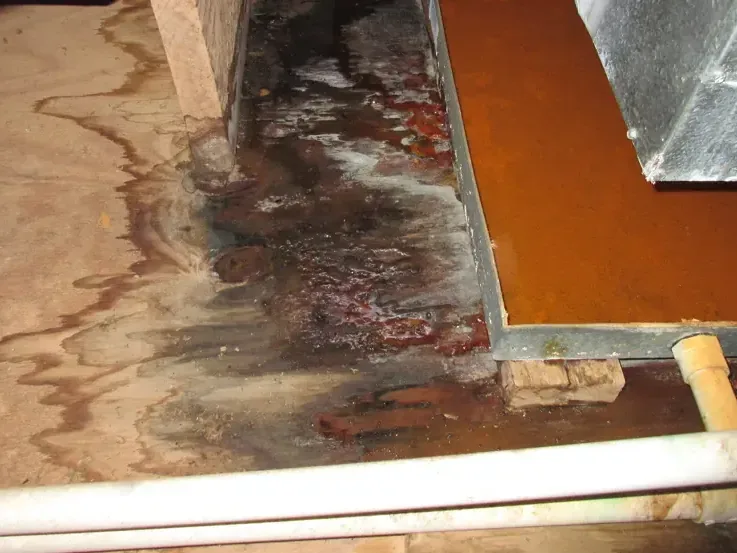
Water heater leaks start small. A damp spot around the base, rust on the tank or a slow drip from a relief valve can turn into a pool that spreads under walls and flooring.
A tank that fails fully releases the water it holds in a short time, and the water goes wherever the floor slopes. Utility rooms often sit next to finished space, so the damage can reach drywall and flooring quickly.
- Water pooled around the base of the tank
- Rust streaks or moisture on the tank jacket
- A drip from the relief valve or the pipe fittings
- Damp drywall or flooring next to the utility room
The first steps after the leak
Safety first. The water supply to the tank goes off at the cold inlet valve, and the power or fuel supply to the heater is turned off.
Once the source is controlled, the work shifts to the water on the floor. Standing water is extracted, wet materials are checked and the area is opened for drying where needed.
- Close the cold water inlet valve
- Turn off the electric breaker or the gas control
- Keep out of water near wiring
- Photograph the tank, the floor and the damage
- Move belongings from the wet area
The city permit rule for water heater work
A city permit is required for plumbing or mechanical work and for water heater installation. That covers replacing a failed tank.
The city allows emergency repairs of water heaters, furnaces, boilers, heat pumps and water supply or sewer service to proceed, but the permit application is due by the next business day and the work cannot be concealed.
What the emergency allowance means
A homeowner or plumber does not have to wait for a permit to restore hot water or stop a leak. The condition is that the application is filed by the next business day.
The permit itself and any inspection are handled between the property owner, the installer and the city, not by the water cleanup crew.
Why concealed work matters
Because the work cannot be concealed, walls or enclosures that hide pipe and connections should stay open until the city has had a chance to look. This also matters for drying, since the same openings help moisture escape.
- Keep connections visible until the permit process is settled
- Ask the installer who is filing the application
- Save the permit number with the claim records
Friday leaks and the noon closing
City Hall and Community Development close at noon on Fridays. A tank that fails on a Friday afternoon means the next business day is Monday, so the application deadline lands then.
That is not a reason to delay cleanup. Water extraction and drying can start as soon as the leak is found, and the permit work can follow on the city's schedule.
Cleanup and drying
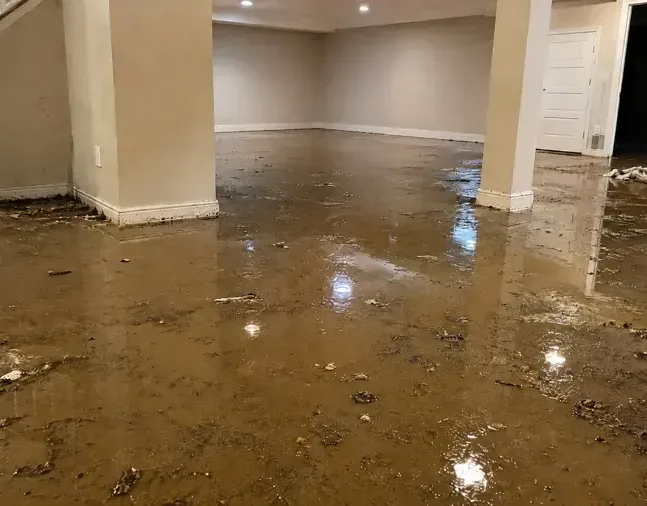
Extraction pulls the water from the floor before it soaks into baseboards and drywall. Flooring that sits over a wet subfloor may need to be lifted so the area under it can dry.
Drywall behind the tank is checked with a moisture meter. If it is wet, a section may be removed so the cavity can dry.
Water heaters often sit on a concrete pad or against a wall that backs onto living space. The crew checks the wall behind and the floor next to the tank, since a slow leak can wet the bottom of a wall before any water reaches the middle of the room.
Cabinets and shelving that stood near the tank are checked as well, because wood and particleboard soak up water at the base.
More about the process is on the water heater leak cleanup page and in the Brighton service area page, and the pulling of water is covered under water extraction.
Hard floors such as tile or sealed concrete usually dry quickly once the water is extracted. Laminate and wood flooring are less forgiving, since the planks swell and edges can lift when water gets underneath.
- Standing water extracted from the floor
- Baseboards and wet drywall checked and opened if needed
- Flooring lifted when water is trapped below
- Air movers and dehumidifiers placed and readings logged
Preventing the next leak
Most tank failures give some warning. A quick look at the tank and the fittings a few times a year can catch a small drip before it becomes a pool.
Age matters too. A tank that is old, rusted or noisy is a candidate for replacement on a planned schedule, which avoids the emergency and gives time to arrange the city permit in the normal way.
- Check the base of the tank and the pipe fittings for moisture
- Look for rust or mineral crust around the connections
- Test the relief valve only as the maker directs
- Note the age of the tank on the label
- Plan replacement before failure when the tank is old
What to keep for the claim
Insurers usually ask for photos of the tank, the date the leak was found and the repair invoice. A sudden tank failure is treated differently from a slow leak that went on for weeks, so the timeline matters.
The price ranges printed on the service page for water heater leak cleanup are hard floor only $900 to $2,500, into finished space $2,500 to $6,000 and a long-running failure $6,000 to $12,000. Final scope depends on what the readings show.
- Photos of the tank and the label
- Date and time of the leak
- Plumber's invoice and permit number
- List of damaged belongings
Questions
Does a Brighton water heater replacement need a permit?
Yes. The city requires a permit for plumbing or mechanical work and for water heater installation.
Can the tank be replaced right after it fails?
Emergency repairs may proceed, but the permit application is due by the next business day and the work cannot be concealed.
Who files the permit?
That is arranged between the property owner and the installer. The cleanup crew handles the water, not the permit.
What if the leak happens on a Friday?
City Hall and Community Development close at noon on Fridays, so the next business day is Monday. Cleanup should still start right away.
Should the cleanup wait for the inspection?
No. Water cleanup is time sensitive, while the permit and inspection follow the city's process.