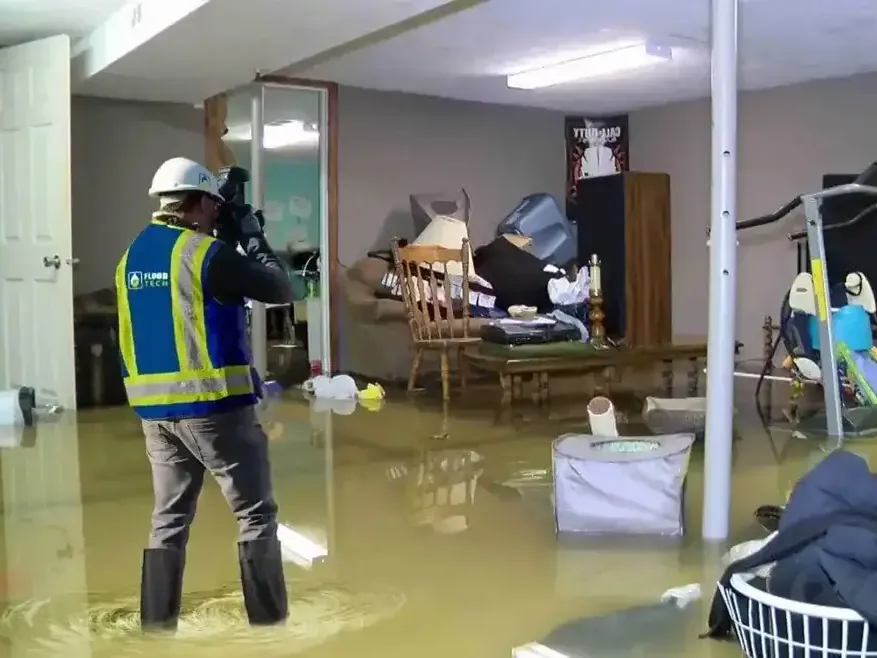
Commerce City sits along the South Platte River and Sand Creek, and a flood in 2013 destroyed the main state fish hatchery building near Dupont. When storm water gets inside a home, it is handled as contaminated water, and the steps are different from a simple pipe leak.
Key takeaways
- Storm and flood water is treated as contaminated because it carries soil and runoff.
- Safety first: avoid standing water near wiring and keep children and pets out.
- Extraction comes before anything else, and porous materials such as pad and soft drywall are usually removed.
- Surfaces are cleaned and disinfected, then the structure is dried with measured readings.
- Record the cause and the damage in plain words for any claim.
A city shaped by rivers and creeks
Commerce City is a home rule city in Adams County with 62,418 residents at the 2020 census. Its history is tied to water: the South Platte River flows through the lakes that run along Interstate 76, and early farms drew water from local wells and ditches that ran from the river.
Sand Creek is part of that story too, since Danish settlers began hog farming along it in 1867. The same landscape that made the area productive for farms also means rain and melt move toward the creek and river corridors.
In 2013 a flood destroyed the main state fish hatchery building near Dupont, and it was demolished soon after. It is a reminder that flood water in this area is not just theory.
- Rain on saturated ground can send water toward doors and low windows
- Rapid snowmelt adds to runoff
- A blocked drain or overwhelmed inlet can push water toward a house
- Water can enter at the garage, a door threshold or a window well
Why storm water is handled differently
Water that enters from outside picks up soil, oil, fertilizer and sometimes sewage. It is classed as contaminated water, which changes what can be saved and what must be removed.
A clean pipe leak can often be dried in place. Storm water usually means that carpet, pad and wet drywall are removed, and hard surfaces are cleaned and disinfected.
What can usually be saved
Solid wood furniture, tile, sealed concrete and some hard surfaces can often be cleaned and kept. They are cleaned, disinfected and dried.
Items that were only briefly wet and are easy to clean are the best candidates.
- Tile and sealed concrete
- Solid wood furniture that can be cleaned
- Metal and hard plastic items
What usually goes
Porous materials absorb contaminated water and cannot be made clean. They are removed so that drying and cleaning can reach what is underneath.
The crew photographs these items before removal so the list can be used for a claim.
- Carpet and pad
- Soft drywall and insulation
- Upholstered furniture and mattresses
- Particleboard cabinets and trim that soaked
First steps for a homeowner
Safety comes first. Standing water can hide hazards, and power may be live in outlets or panels near the water.
If it is safe, move belongings to dry areas and take photos before cleanup starts. Do not walk through the water more than needed, since it may be contaminated.
- Stay out of deep water and away from wiring
- Turn off power to the area only from a dry spot
- Take photos of the water level and entry points
- Move valuables and documents to a dry place
- Keep children and pets away from the water
Extraction and removal
Truck-mounted and portable units pull standing water. This is the same step covered under water extraction, but with added precautions for contaminated water.
Once the water is out, wet materials are removed and bagged. The crew then cleans and disinfects surfaces, which is the main difference between storm cleanup and a clean-water leak.
Garages and utility areas are common entry points for storm water, and finished rooms next to them are often the first to be affected. The crew traces where the water went, since it often travels under a wall and shows up in a room that never touched the door.
Tracing it early helps limit the amount of material that has to be removed.
More detail on the full process is on the storm flood cleanup page and on the Commerce City storm flood service page.
- Standing water extracted
- Porous materials removed and bagged
- Hard surfaces cleaned and disinfected
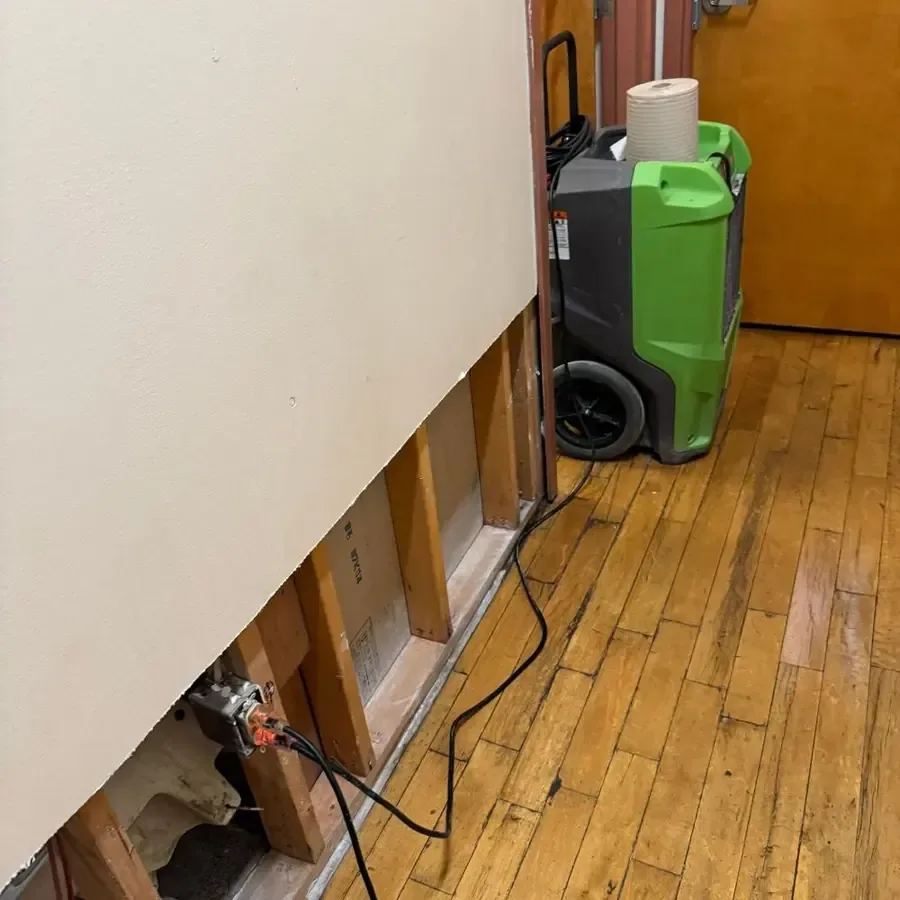
- Walls opened where water reached the cavity
- Moisture readings logged
Drying the structure
After cleaning, air movers and dehumidifiers bring the building materials back to dry. Readings are taken at each visit, and drying continues until framing, subfloors and concrete read dry.
Drying is also what prevents the lingering odor and swelling that come from leaving moisture behind.
Concrete holds moisture longer than most people expect, so slabs and block walls are read as carefully as wood framing.
Preparing a home before the next storm
Most flood losses are not stopped by one measure, but a few habits reduce the amount of water that reaches a door or window. Keeping gutters clear and downspouts pointed away from the foundation keeps roof water from collecting at the wall.
Window wells and low door thresholds are common entry points. Clearing debris from wells and storing valuables off the floor in a lower room limit what a storm can reach.
None of these habits makes a house flood proof, and they do not replace insurance questions. They simply cut down the amount of water that gets in during an ordinary storm.
- Clear gutters and extend downspouts
- Keep window wells free of leaves and soil
- Store keepsakes and paperwork on shelves, not on the floor
- Know where the main water shutoff and the electrical panel are
Records and costs
Photos, a list of damaged items and a note on how the water got in all help with a claim. Policies often treat outside water differently from a plumbing failure, so the cause should be recorded carefully and the insurer asked about coverage.
Pricing printed on the service page for storm and flash flood cleanup is printed as ranges: one entry point $2,000 to $6,000, finished basement $6,000 to $15,000 and deep flooding $15,000 to $35,000. Final cost depends on the depth, the area and the materials.
- Photos of the water level and entry points
- List of damaged items with rough values
- Date and time the water was found
- Insurer contact and claim number
Questions
Is storm water inside a house dangerous?
It can be. It may carry soil, oil and sewage, so it is treated as contaminated water and handled with protective steps.
Can wet carpet be saved after a flood?
Usually not after contaminated water. Carpet and pad are porous and are normally removed.
Does the crew disinfect the area?
Yes. After removal, hard surfaces are cleaned and disinfected before drying.
Why does drying take more than pumping?
Pumping removes standing water but not the moisture held in framing, subfloors and concrete. Drying removes that, and readings show when it is done.
Does homeowners insurance cover flood water?
That depends on the policy. Outside water is often treated differently from a plumbing failure, so the insurer should be asked directly.