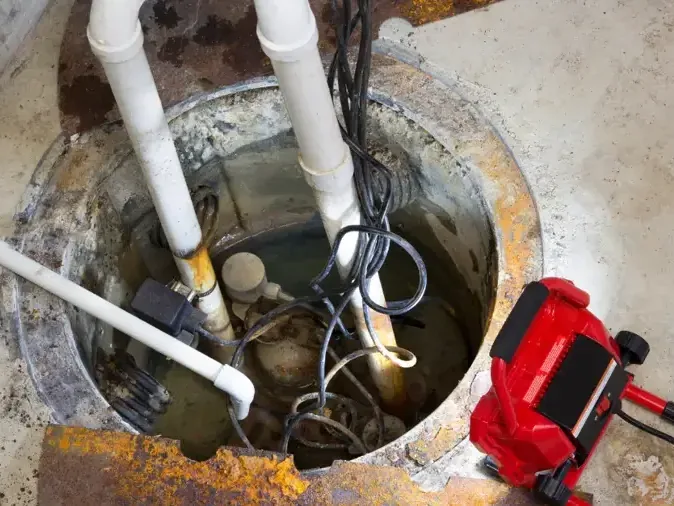
A basement can go from dry to ankle deep during a heavy storm or a fast spring melt, and the first hours decide how far the damage spreads. This post covers how to tell a wet lower level from a damp one, what to shut off, and what the restoration crew removes first.
Key takeaways
- Colorado floods come with storms and with early or rapid snowmelt, so a wet lower level can happen in spring as easily as in summer.
- Stay out of standing water until the power to that area is confirmed safe, and treat water that came up through a floor drain as contaminated.
- Photograph the water, the affected belongings and the entry point before anything is moved.
- Extraction comes first, then measured drying; carpet pad and wet drywall bases are usually the first materials to go.
- Describe the cause in plain words for the insurer, since policies treat outside water and plumbing failures differently.
Why lower levels take on water in spring and after storms
Colorado floods are among the most widespread natural hazards in the state, and the usual triggers are flash floods with storms and early or rapid snowmelt. Thornton sits at an elevation of 5,210 feet, so a late snowfall followed by warm days can release a lot of water at once.
Spring snowmelt runoff in the region flows into Clear Creek and the South Platte and Cache la Poudre rivers, where the city holds water rights. When that same melt meets saturated ground or a heavy rain, water looks for the lowest point of a house.
Swelling soil is also a common and sometimes serious problem in Colorado. It can cause severe damage to houses, sometimes slowly over time, which is one more reason to look at the base of walls and the slab after a wet season.
- Water seeping along the bottom of a wall after a storm
- A floor drain that gurgles or rises during heavy rain
- Damp carpet at the edges of a room, away from any pipe
- Water around a window well or a basement door
Wet or only damp: how to tell the difference
The answer changes what happens next. Standing water needs extraction right away, while a damp surface may only need a fan and a dehumidifier to dry on its own.
Signs of active water
Water that moves, shines on the floor or leaves a ring on a wall is still coming in. Squelching carpet, a pad that feels spongy and baseboards that sit in a puddle all point to active water.
If the level is rising, the source has not stopped, and the plan is to protect people and contents first.
- Visible puddles or a film of water across a slab
- Carpet that releases water when pressed
- Drywall that feels cool and soft at the base
Signs of a slow seep
A slow seep leaves tide marks, white mineral crust or a chalky feel on masonry, and a damp odor that comes and goes with the weather. It still counts as a water loss when it soaks materials.
A moisture meter is the only reliable test, because surfaces can feel dry while framing and drywall hold water.
What to shut off and what to leave alone
Safety comes before cleanup. Water and electricity are a dangerous mix, so power to a flooded area should be turned off only from a dry spot, and anything else should be left to the utility or an electrician.
If the water came from a plumbing failure, the main water supply goes off. If it came from outside, there is nothing to shut off, and the job is to keep people out and limit what the water touches.
- Turn off power to the affected area only from a dry location, or wait for an electrician
- Do not use a household vacuum on wet floors
- Lift furniture legs onto blocks or foil and move small items to a dry room
- Keep children and pets out of the water
- Treat water from a floor drain or toilet as contaminated and avoid contact
How the crew removes the water
Water extraction uses truck-mounted and portable units to pull standing water before it soaks pad, drywall and framing. The goal is to get the bulk of the water out first, since every hour it sits it moves further into porous materials.
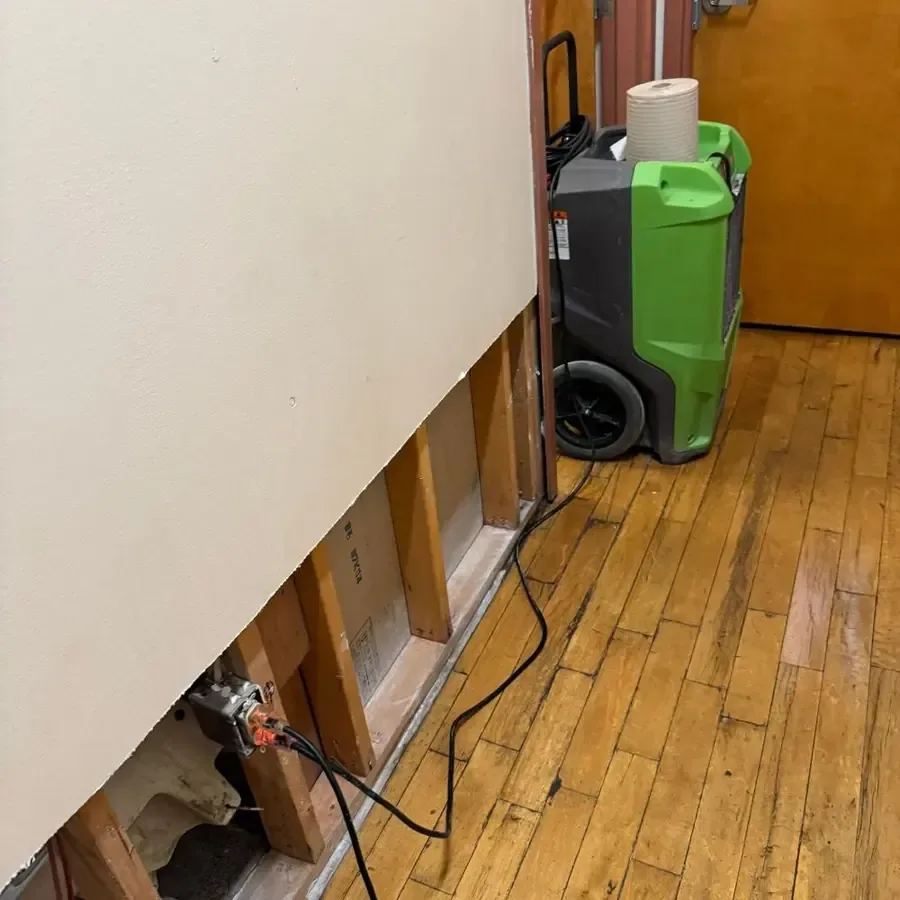
Carpet pad is usually removed because it holds water and is hard to dry in place. Drywall is often cut a short height above the floor so the cavity behind it can be opened and dried.
More detail on the process is on the basement flooding cleanup page, and the first removal step is covered under water extraction.
- Standing water extracted with truck-mounted and portable equipment
- Wet pad and unsalvageable materials removed and bagged
- Contents moved or blocked up and surfaces cleaned
- Moisture readings logged before drying starts
Drying after the water is out
Extraction is not the end. Air movers and dehumidifiers bring the remaining moisture down, and readings are logged at each visit until framing, drywall and slab match dry reference materials.
A damp basement left to dry on its own can hold water for a long time, and that leftover moisture can lead to odor and swelling of trim and doors. Controlled drying, as described under structural drying, is what turns a cleanup into a finished repair.
Records, claims and what the work costs
Photos taken before cleanup, a written note of when the water was found and a list of damaged items all help with a claim. Policies often treat outside water and plumbing failures differently, so the cause should be described plainly, and the insurer should be asked about coverage before a decision is made.
Pricing printed on the service page for basement flooding cleanup is printed as ranges: unfinished or small area $1,500 to $4,000, finished basement $4,000 to $9,000, and sewage or outside water $9,000 to $20,000. Real costs depend on the area, the water type and the materials.
- Date and time the water was noticed
- Photos of the entry point and every wet surface
- A list of damaged belongings with rough values
- Names and claim numbers from the insurer
Questions
Can a basement flood from snowmelt alone?
Yes. Colorado floods come from storms and from early or rapid snowmelt, and melt that meets saturated ground can send water toward the lowest part of a house.
Should the carpet be pulled up right away?
Standing water comes out first. Pad that has soaked is usually removed, while carpet may be saved depending on how long it stayed wet and what kind of water it was.
Is water from a floor drain different?
It can be. Water that rises through a floor drain may carry sewage and is handled as contaminated water, with different removal and disinfecting steps.
How does the crew know the basement is dry?
Moisture meters and a thermal camera are used at each visit, and drying stops only when readings in framing, drywall and the slab match dry reference materials.
Does a damp odor mean the work is not finished?
It often means moisture is still trapped in a wall or under flooring. More readings and drying are the next step, not air fresheners.