Ceiling Leak Water Damage in Superior, CO
A wet ceiling can mean a roof leak, a pipe above or a neighbor's fixture, so the crew finds the source, opens the saturated section and dries the cavity before it spreads into walls.
(888) 532-8620Dry the wet ceiling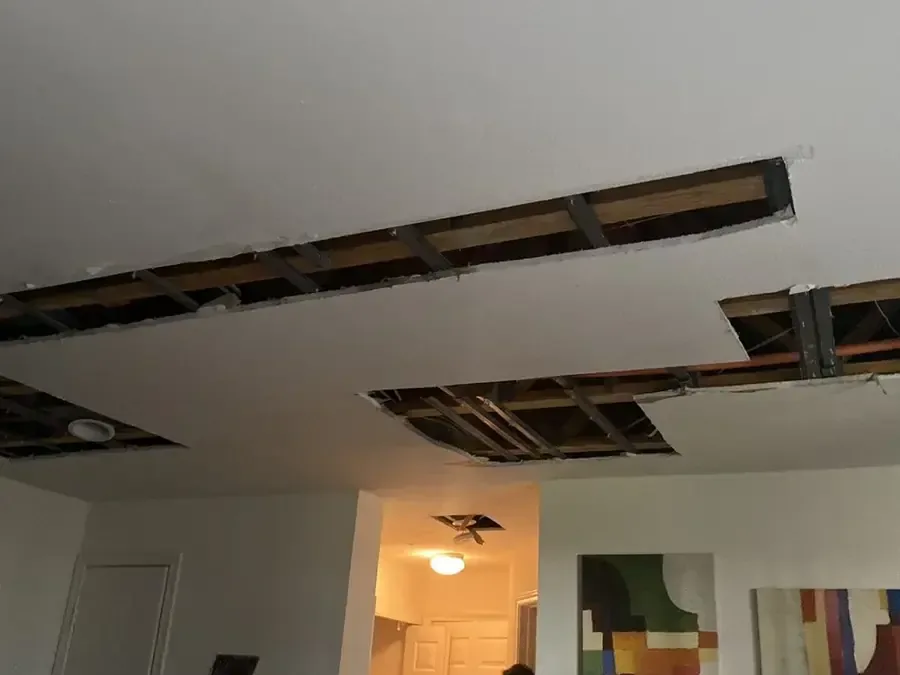
What a proper ceiling leak water damage job takes in Superior
Water travels sideways
Ceiling water follows joists before it drips, so the stain can sit far from the real source and the wet area is bigger than it looks.
Shared buildings add steps
In townhomes and apartments the source may be in another unit, so stopping the water includes reaching the neighbors or building management.
Sagging means saturated
Bowing drywall holds a pocket of water that can drop at any moment, so opening it safely protects both people and floors.
Both floors get dried
The ceiling, the walls and the floor beneath are all checked, because falling water wets more than the visible stain.
What to do right now about ceiling leak water damage
- Find the source. The crew locates the leak above, using meters and a thermal camera, and confirms with the occupants and the building that the water has been stopped.
- Open the wet section. Saturated drywall and insulation are removed in strips, and the cavity is exposed so trapped water drains and air can reach the joists.
- Dry the cavity and rooms. Air movers and dehumidifiers dry the joists, the walls and the floor below, with readings taken on each visit to track progress.
- Verify and document. Final readings and photos are recorded so the insurer, the building and the repair contractor all have the same set of facts to work from.
What does ceiling leak water damage cost in Superior, CO?
One ceiling section often costs $800 to $2,500, a leak that also reached walls and the floor runs $2,500 to $5,500, and a long-running leak that went unnoticed for some time can reach $5,500 to $11,000.
One ceiling section
- One stained or sagging area
- Insulation above removed
- Short drying period
Ceiling, walls and floor
- Water dripped into the room below
- Wall base and flooring dried
- More equipment and visits
Long-running leak
- Slow leak that was hidden
- Multiple joist bays affected
- Extended removal and drying
What moves the number most:
- The water category: clean, gray or black water
- Square footage and how many levels got wet
- Material class: carpet, drywall, hardwood or a concrete slab
- How many hours passed before drying started
Ranges are typical, not a quote. The water damage cost calculator gives a closer range for your own rooms.
Ceiling Leak Water Damage, step by step
On every Superior job, moisture gets mapped before any equipment goes down, and the equipment stays until the readings say dry.
Call about the stain
Describe the stain, whether it is dripping and what sits above it, such as a bathroom or another unit. The crew explains how to protect the room.
Source search
Meters and a thermal camera follow the moisture back to its origin so the leak can be stopped for good.
Opening and drying
The ceiling is opened where needed, wet materials are removed and drying equipment is set up.
Closeout
Final readings show the space is dry, and the records go to the insurer, the building and the repair contractor.
Ceiling leaks in multi-story townhomes and in Downtown Superior apartments often start in a unit above. The water drips through a light fixture or a vent, soaks the joist bay and shows up on a ceiling below that may belong to a different household, which means the cleanup often involves more than one set of people and one set of rules.
Finding where it came from
Before drying, the source has to be located. It may be a supply pipe, a drain, an upstairs appliance or a roof opening. The crew uses meters and a thermal camera to follow the wet area outward from the stain, and in a shared building the neighbors above are contacted so the water can be stopped at its source before any drying equipment goes in.
- Meters and thermal camera used
- Upstairs fixtures and drains checked
- Building management contacted if shared
- Stained area mapped before opening
Opening the ceiling
Drywall that is sagging or saturated must come out, because it will not recover. Opening the ceiling in strips lets trapped water drain and exposes the joist bays and insulation so they can dry. Recessed lights, fans and vents are checked for water, and power to them is shut off first, because water and wiring are a dangerous mix in any ceiling.
- Sagging sections opened safely
- Wet insulation removed
- Light fixtures made safe first
Ceiling bulging or dripping right now? Move belongings away, stay clear of the bulge, switch off power to nearby fixtures and describe the damage so the crew can plan.
(888) 532-8620Call for a ceiling crewDrying the rooms around it
Water that fell from the ceiling also wets the walls and floor below, so the crew checks the carpet, baseboards and furniture. Dehumidifiers and air movers run until all of the materials read dry, and repairs to drywall, texture and paint follow only after the final readings, so the new finish is applied over materials that are really dry.
Ceiling leak water damage across Superior and the towns nearby
Dispatch runs day and night, and the restoration team works every neighborhood listed on the service area page.
Ceiling leak work covers ZIP 80027, including townhome and condo communities in Rock Creek, Montmere at Autrey Shores, Calmante and Sagamore, plus apartments in Downtown Superior and the older homes of Original Town.
The same service nearby: ceiling leak water damage in Thornton, Erie, Brighton.
Related water damage services in Superior
Ceiling Leak Water Damage questions, answered
Water still coming in?
Ceiling wet from a leak above? Describe the stain and where it started, and the crew will explain the opening and drying plan.
(888) 532-8620 Plan the ceiling dry-outWhat causes a ceiling to leak?
Common causes are a supply pipe or drain above, an appliance leak upstairs, or water coming through the roof. Meters and a camera help find the source before the ceiling is opened, which avoids cutting in the wrong place.
Is a bulging ceiling dangerous?
It can be. The bulge holds water, and the drywall may drop suddenly. Stay clear of it, and let the crew release the water in a controlled way.
What if the leak comes from a neighbor's unit?
Contact the neighbor or building management so the water is stopped, and document your own damage with photos before anything is moved. Insurance questions are separate, and the crew supplies readings and photos for them.
Will the whole ceiling have to be replaced?
Not always. Only the saturated or sagging sections are removed, and drywall that is only slightly damp can sometimes be dried in place, which keeps the later repair smaller and cheaper.
Do I need to worry about electrical fixtures?
Yes. Water in a light fixture or fan is a hazard, so power to that circuit should be switched off from the panel, and the fixture should not be touched, before the crew opens the ceiling.
How long before repairs can start?
After readings confirm that joists, the insulation space and the neighboring drywall are dry. Closing the ceiling too early traps moisture, so the crew shares final readings with the contractor before repairs begin.
Does ceiling water damage affect the floor below?
Often. Dripping water wets carpet, baseboards and the subfloor, and it can run into walls, so the room beneath is checked and dried along with the ceiling itself.
Dry the ceiling and the rooms below it
The leak above, the ceiling and the floor below are all part of the job.
(888) 532-8620Reach the ceiling crew