Appliance and Supply Hose Leaks in Englewood, CO
Leaking washers, dishwashers and supply hoses cause hidden damage under floors and inside cabinets. Crews trace the water, lift wet flooring and dry what it reached. Hidden moisture is found with meters before any repair begins.
(888) 532-8620Call about the appliance leak damage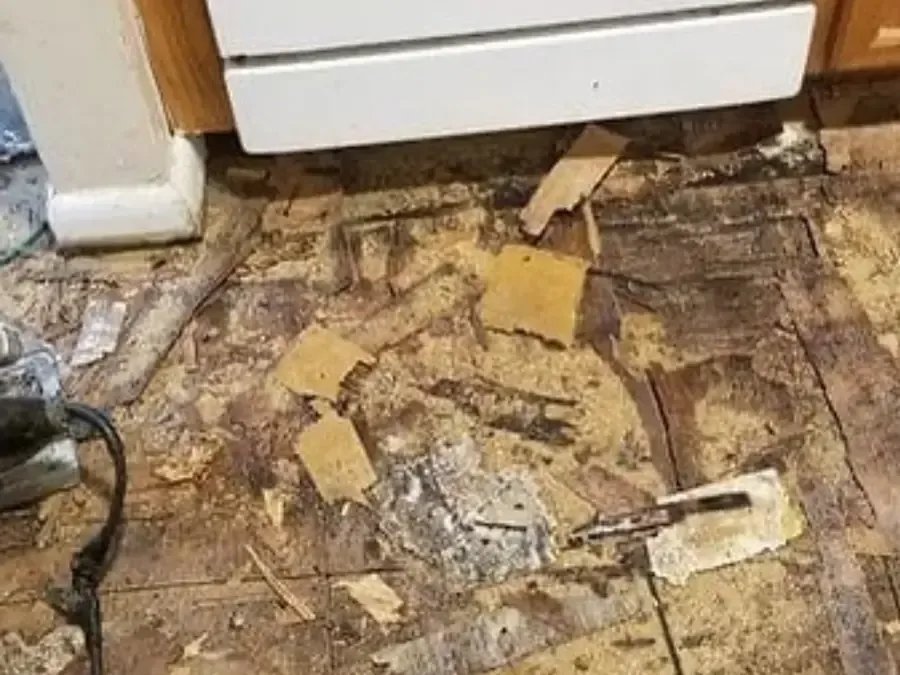
What a proper appliance and supply hose leaks job takes in Englewood
Hidden water located
Meters and thermal imaging find wet subfloors and cabinet bases that look dry on top. That prevents surprises later.
Gray water cleaned
Washer and dishwasher water carries soap and bacteria, so surfaces are cleaned and not only dried. Odors fade once the film is gone.
Cabinet access done carefully
Toe kicks and panels are removed with care, so cabinets can dry without being torn out. Cabinet faces stay intact.
Slow leaks documented
Notes on how long the leak ran help the adjuster understand whether it was sudden or gradual. That history shapes the claim.
What to do right now about appliance and supply hose leaks
- Stop the leak and pull the appliance. The crew confirms the water is off and moves the appliance to inspect the floor beneath it. Shutoff valves are tested too.
- Trace the moisture. Meters and a thermal camera show how far water traveled under floors and cabinets. Wet spots are marked for later.
- Remove what cannot dry. Wet flooring, toe kicks and damaged underlayment are removed. Damaged pieces are bagged and photographed.
- Dry and clean. Air movers and dehumidifiers dry the space, and gray-water surfaces are cleaned. Humidity is monitored throughout.
What does appliance and supply hose leaks cost in Englewood, CO?
Appliance and supply hose leak cleanup in Englewood commonly costs $700 to $10,000. A leak caught early is the low end, water under cabinets costs more, and a slow leak that ran for weeks costs the most. Hidden damage raises the price.
Caught early
- Single area affected near the appliance
- Extraction and drying and floor checked
- Short monitoring for the claim
Under cabinets or below
- Cabinet bases dried under the cabinets
- Flooring lifted and toe kicks removed
- Moisture mapping with a thermal camera
Slow leak for weeks
- Subfloor soaked across the kitchen
- Heavy removal and cabinet bases
- Extended drying for several weeks
What moves the number most:
- The water category: clean, gray or black water
- Square footage and how many levels got wet
- Material class: carpet, drywall, hardwood or a concrete slab
- How many hours passed before drying started
Ranges are typical, not a quote. The water damage cost calculator gives a closer range for your own rooms.
Appliance and Supply Hose Leaks, step by step
On every Englewood job, moisture gets mapped before any equipment goes down, and the equipment stays until the readings say dry.
Call and shutoff
The caller describes the leak, and the technician explains how to close the supply and pull the appliance forward. The crew arrives with meters, extractors and drying gear.
Inspection
The crew traces water beneath floors and cabinets, and checks rooms below for stains. Rooms below the leak are checked for ceiling stains too.
Removal and cleaning
Wet flooring and underlayment come out, and affected surfaces are cleaned for gray water. Gray-water surfaces get a cleaning pass before equipment goes in.
Drying and report
Equipment dries the floor system, and a report is prepared for the claim. Final readings confirm the cabinets and floor system are dry.
Leaking washers and dishwashers cause hidden damage under floors, because water slips beneath the appliance and into the subfloor where no one is looking. The first sign is often a soft floor, a musty smell or a stain on a ceiling below. Slow leaks are the worst, since the damage builds quietly behind the machine for weeks.
Typical appliance leaks
Supply hoses burst or loosen, drain hoses pop off, and door seals and pump housings wear out. A leak that runs only during a cycle may soak the floor for weeks before it is noticed. Refrigerator ice-maker lines and under-sink connections cause similar trouble. Older homes and apartment units often have original shutoff valves that are stiff or stuck, which delays stopping the water.
- Washer hoses and drain connections
- Dishwasher seals and pumps
- Ice-maker supply tubes
- Under-sink supply connections
Finding the hidden water
Moisture meters and a thermal camera show where water went beneath cabinets, laminate and tile. The appliance is pulled out so the floor and the cabinet base can be inspected. Water from washers and dishwashers is gray water, so affected materials are cleaned as well as dried. Even a thin film of water under vinyl can lift seams and loosen adhesive, so the flooring is checked at its edges.
- Appliance pulled for access
- Cabinet bases checked
- Subfloor read with meters
A leaking appliance can soak floors for weeks without a sign. Call now to talk through tracing and drying. A technician will explain the next steps.
(888) 532-8620Talk to a technicianDrying under cabinets and floors
Flooring that cannot dry is lifted, toe kicks are removed, and air movers push dry air beneath cabinets. Dehumidifiers pull the rest from the room. For a tank source instead, read about water heater leak cleanup. Small appliance leaks are cheap to dry when caught early, while a slow leak that ran for weeks costs far more.
Appliance and supply hose leaks across Englewood and the towns nearby
Dispatch runs day and night, and the restoration team works every neighborhood listed on the service area page.
Appliance leak work covers Englewood, including Hampden Hills apartments, older northwest houses and ZIP codes 80110, 80111, 80112 and 80113. Crews also work on nearby streets and in apartment complexes.
The same service nearby: appliance and supply hose leaks in Thornton, Commerce City, Superior.
Related water damage services in Englewood
Appliance and Supply Hose Leaks questions, answered
Water still coming in?
A leaking appliance can keep soaking the floor for weeks. One call explains how tracing and drying work.
(888) 532-8620 Describe the leak to a technicianHow can a hidden appliance leak be found?
Moisture meters and thermal imaging read floors and cabinet bases, revealing wet areas that look dry from above. The appliance is pulled forward to expose the wall base too.
Is dishwasher water considered dirty?
Yes. It is gray water, so it carries soap and bacteria, and affected surfaces are cleaned as well as dried. Cleaning products are used on affected surfaces after the water is removed.
Can laminate floors be saved after a leak?
Laminate swells when soaked, so it is usually replaced. Tile and sealed hard surfaces can often be dried in place. Tile grout and sealed vinyl tend to do better than click flooring.
Does insurance cover washer leaks?
Sudden leaks are often covered, while slow leaks may be treated as maintenance issues. Photos and plumber notes support the claim. Keeping the plumber's invoice and the appliance age on file also helps.
Do cabinets need to be replaced?
Not always. Toe kicks and panels can be removed so air movers dry the base, and only swollen or damaged pieces are replaced. Cabinet doors and drawers are checked for swelling before any replacement decision.
What if the leak is in an apartment?
The crew documents the damage below and shares findings with the manager and carriers, so the source and the damage line up. Owners sometimes need the same records for a security deposit or building policy.
How soon should a hose be replaced?
Old rubber hoses can fail without warning. A plumber can swap them for braided versions, which lowers the risk. Replacing hoses every few years is cheaper than a single dry-out.
Get the hidden water found and dried
Call any hour to describe the appliance leak, and a technician will explain tracing and drying.
(888) 532-8620Call about the leak damage