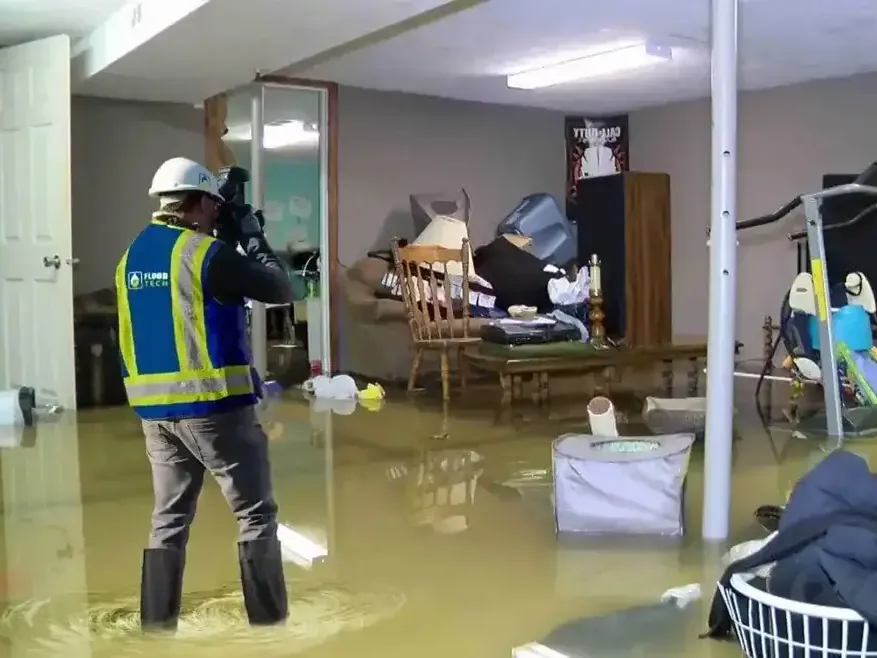
The South Englewood Flood Reduction Project is a $23 million stormwater project that is now complete. It was built to reduce flood risk in major storms, but no storm system removes every risk, and homes that still take in water need a fast response.
Key takeaways
- The project added detention ponds and upgraded storm pipe around Rotolo Park, Stanford Avenue, South Navajo Street and Oxford Avenue.
- Pipe capacity was sized on a 25-year storm of 1.66 inches of rain in one hour, and the design aims to reduce flood risk in major storms up to a 100-year event.
- A storm bigger than the design, a blocked inlet or a plumbing failure can still put water in a house.
- When water arrives, extraction and measured drying matter more than the story of what was built.
- Records of the date, the entry point and the damage help any claim.
What the project built
The city bought the property for the detention ponds in April 2022, received construction bids in September 2023 and held a groundbreaking in February 2024 at Radcliff Avenue and Navajo Street. Stormwater fees funded the project, which is now complete.
The detention ponds sit on the west side of South Navajo Street, just south of West Radcliff Avenue. Existing storm pipe on Oxford Avenue from Santa Fe to the South Platte River was rehabilitated, and pipe improvements covered the Rotolo Park, Stanford Avenue, South Navajo Street and Oxford Avenue areas.
A tunnel boring machine installed storm pipe along Stanford Drive and Stanford Avenue and finished its second run on March 14, 2025. Pipe upgrades were also meant to carry more water from upstream areas near Acoma Street south of Tufts Avenue and Rotolo Park.
- Detention ponds on the west side of South Navajo Street
- Storm pipe upgrades in the Rotolo Park, Stanford Avenue and Oxford Avenue areas
- Rehabilitated pipe on Oxford Avenue to the South Platte River
- Pipe installed by tunnel boring along Stanford Drive and Stanford Avenue
What the design is meant to handle
Pipe capacity was sized on a 25-year storm, which is 1.66 inches of rain in one hour. The detention ponds are designed to drain within 24 to 48 hours after rain or snowmelt, and the project was designed to reduce flood risk during major storms, including a 100-year storm event.
Those numbers describe the design, not a promise that no water will reach a home. The city kept the new pond near South Navajo Street gated and closed to the public while it monitors how the system performs in storms.
Where a system can fall short
A storm heavier than the design, a clogged inlet or water that reaches a house by a path the pipes do not serve can all lead to wet floors.
Plumbing failures inside a house are separate from stormwater and are not affected by the project.
- A storm larger than the design event
- Debris blocking an inlet or grate
- Water pushed against a door or low window
- A burst pipe, water heater or appliance leak inside the home
Why this still matters to a homeowner
Living near improved infrastructure can lower risk, but it does not change what to do when water arrives. The first hours still decide how far the damage spreads.
What to do when a lower level takes in water
Safety comes first. Stay out of standing water until power to the area is confirmed safe, and treat any water that came from outside as contaminated.
Once people are safe, photograph the water and the damage, and note when it started. Move belongings to dry areas and avoid walking through the water more than needed.
- Turn off power to the area only from a dry spot
- Keep children and pets away
- Photograph the water, the entry point and damaged items
- Lift furniture and small items out of the water
- Do not run household vacuums or fans in standing water
How the crew removes the water
Storm water is handled as contaminated water. Truck-mounted and portable units pull the standing water, and porous materials such as pad and soft drywall are removed because they cannot be made clean.
Surfaces are cleaned and disinfected before drying starts. The storm flood cleanup service page lays out the steps, and the basement flooding cleanup page covers lower levels in more detail.
For the removal of the water itself, the storm water and flash flood cleanup page explains how contaminated water is handled.
- Standing water extracted
- Pad, soft drywall and insulation removed if soaked
- Surfaces cleaned and disinfected
- Cavities opened where water reached them
- Moisture readings logged for a scope
Drying and rebuilding
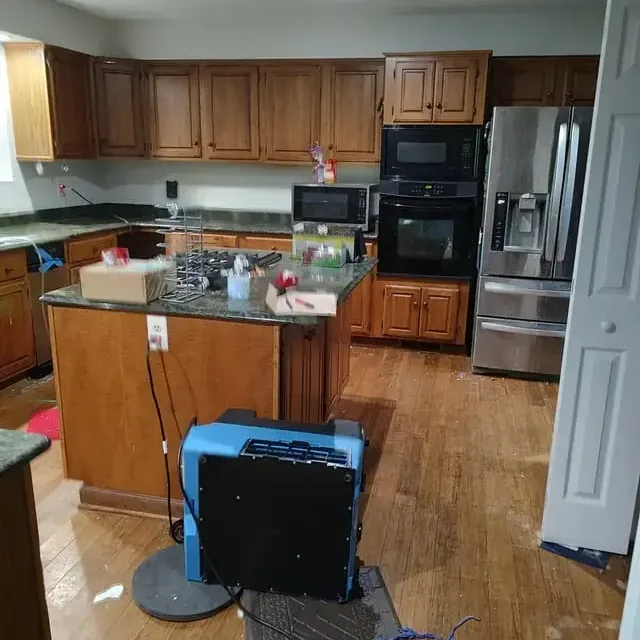
After extraction, air movers and dehumidifiers bring the remaining moisture out of framing, subfloors and concrete. The crew takes readings at each visit and stops only when those readings match dry reference materials.
Rebuilding should not start until drying is complete. Closing walls over damp framing hides the problem and makes later repairs harder.
Why an inch of rain can still matter
The design numbers describe pipes and ponds in the street, but a house has its own weak points. Doors, window openings, the garage and any low floor can take in water when runoff pools against them.
Plumbing inside the house is a separate source. A burst pipe or a failed appliance can flood a room on a dry day, and the project has no effect on that.
A response plan should cover both outside water and inside leaks.
That is why records and a quick call to a restoration company matter more than the story of the infrastructure. The faster the water is out, the less of the house it reaches.
- Check doors, garage and low windows after heavy rain
- Know where the main water shutoff is
- Keep valuables off the floor in lower rooms
- Ask the insurer what kind of water is covered
Records and claims
Water that comes in from outside and water that comes from a plumbing failure are often treated differently by insurers, so the cause should be written plainly and the policy checked. Photos, dates and a list of damaged items support the claim.
Pricing printed on the service page for storm and flash flood cleanup is printed as ranges: one entry point $2,000 to $6,000, finished basement $6,000 to $15,000 and deep flooding $15,000 to $35,000. The final scope depends on the depth, the area and the materials.
- Photos of the water and the entry point
- Date and time the water was noticed
- List of damaged items
- Insurer contact and claim number
Questions
What did the project cost and who paid?
It is a $23 million project funded by stormwater fees, and it is now complete.
Does the project keep every house from flooding?
No. It was designed to reduce flood risk in major storms, but a storm bigger than the design, a blocked inlet or a plumbing failure can still put water inside.
Are the detention ponds open to the public?
The new pond near South Navajo Street stayed gated and closed to the public while the city monitors how it performs in storms.
How quickly do the ponds drain?
They are designed to drain within 24 to 48 hours after rain or snowmelt.
Is storm water in a house safe to touch?
Not without precautions. It can carry soil and sewage, so it is treated as contaminated water.