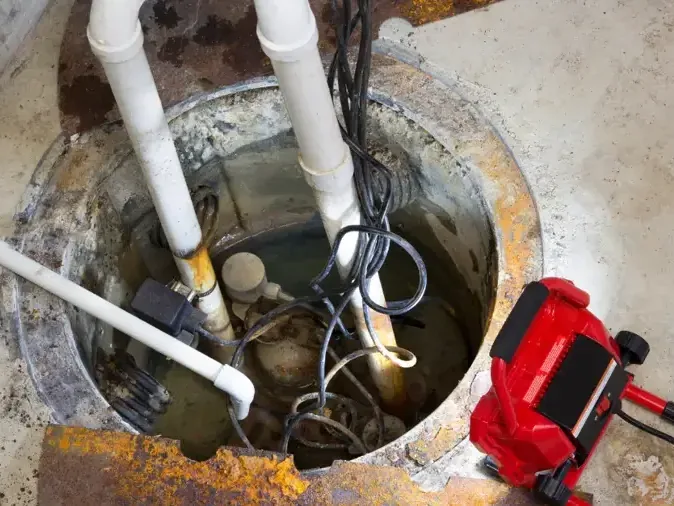
On September 11, 2013, Erie was the hardest hit spot in Boulder County during a flash flood warning, with 9 to 12 inches of standing water across the parkway. Reports that day included flooded basements and downed power lines, and the event still shapes how local homeowners think about water.
Key takeaways
- Flash flood water in a house is contaminated and is handled with removal, cleaning and disinfecting, not just pumping.
- Power and standing water are a dangerous mix, so electrical safety comes before cleanup.
- Flooded basements were reported across the area on September 11, 2013.
- Extraction first, then measured drying; porous materials that soaked are usually removed.
- Written records of the date, the entry point and the damage help any claim.
What happened on September 11, 2013
A flash flood warning that day reached extreme southwest Weld County. The town was the hardest hit spot in Boulder County, with 9 to 12 inches of standing water across the parkway.
Reports that day included flooded basements and downed power lines nearby. It showed how fast water can move from a street into a house and how power hazards often come with the flood.
The town also has older flood history, with major floods in 1890, 1921 and 1972. The flood record is long enough that local homeowners treat the risk as real.
- Flash flood warning that reached extreme southwest Weld County
- 9 to 12 inches of standing water on the parkway
- Reports of flooded basements
- Downed power lines in the area
Why flash flood water is different
Flash flood water comes from outside and picks up soil, oil and sometimes sewage on its way. It is treated as contaminated water, which changes what can be saved.
Clean-water leaks from a pipe can often be dried in place. Flash flood water usually means that carpet, pad and soft drywall are removed, and hard surfaces are cleaned and disinfected.
Materials that are usually removed
Porous materials absorb contaminated water and cannot be made clean. Removing them lets drying and cleaning reach what is under them.
- Carpet and pad
- Soft drywall and insulation
- Particleboard cabinets that soaked
- Upholstered furniture
Materials that can often be saved
Hard, sealed materials can usually be cleaned and disinfected and then dried.
- Tile and sealed concrete
- Solid wood that can be cleaned
- Metal and hard plastic items
The first steps when a lower level floods
Safety comes first. Standing water can hide hazards, and power may be live in outlets and panels near it.
Electrical power to the area should be turned off only from a dry spot, or left to an electrician.
If it is safe, take photographs and move belongings to a dry area. Stay out of the water as much as possible.
A basement that has taken in water also affects the heating system, the electrical panel and stored items. Those should be photographed and checked by the right trade before they are used again.
Pets and children should stay out of the lower level until the water is out and the surfaces are cleaned.
- Turn off power to the area only from a dry spot
- Keep children and pets out of the water
- Photograph the water level and the entry point
- Move papers and electronics to a dry room
- Contact the insurer early and ask about coverage
How the crew handles the water
Truck-mounted and portable units pull standing water out of the house. The crew then removes soaked pad, soft drywall and insulation, bags them and cleans the remaining surfaces.
More detail is on the basement flooding cleanup page and the storm flood cleanup page, and the main basement flooding cleanup service explains the steps in full.
Heavy equipment may be needed for large volumes of water, so access to the driveway and the lower level door should be kept clear for the crew.
- Standing water extracted
- Soaked pad, soft drywall and insulation removed
- Hard surfaces cleaned and disinfected
- Cavities opened where water got in
- Moisture readings logged
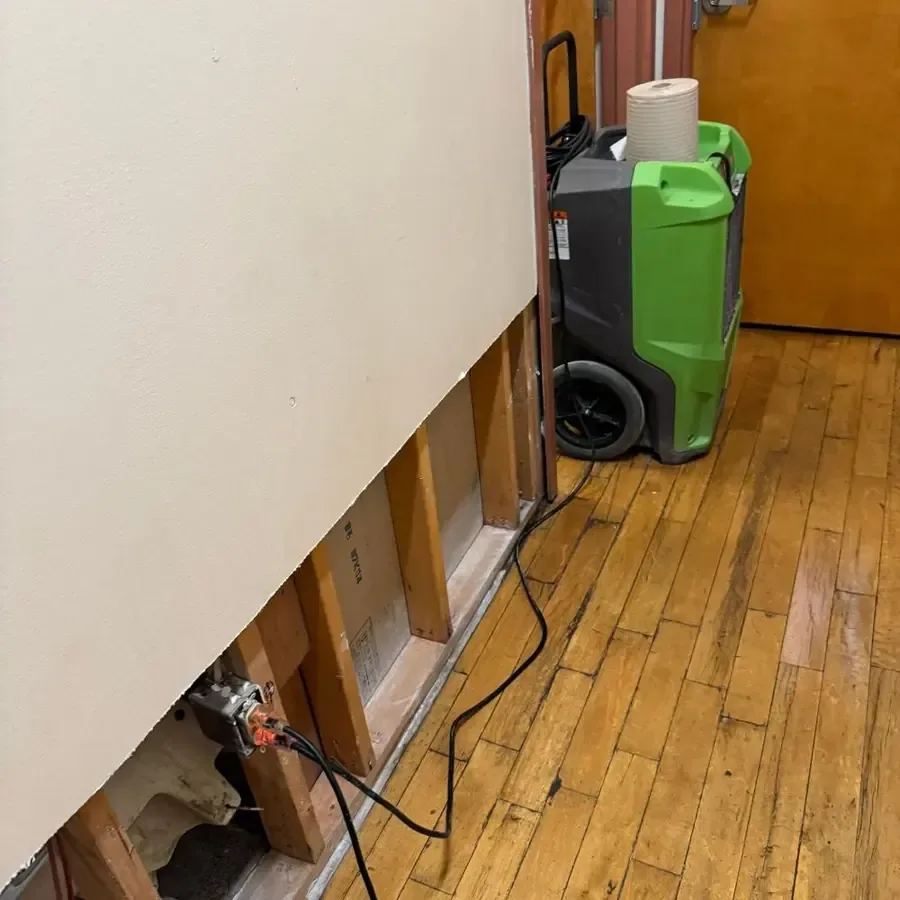
Drying a finished lower level
Many homes in the area are single-family, and about 93% of residents live in single-family homes. That means a finished lower level may hold carpet, drywall and trim that all need to be dried or replaced.
Air movers and dehumidifiers run until readings in the framing, drywall and slab match dry reference materials. Rebuilding starts only after those readings are dry.
Rapid growth in the area also means many homes are recent, since the town population grew 65.64% between the 2010 and 2020 censuses. Newer finishes still need to be dried carefully, since modern trim and cabinets often use materials that swell when wet.
Getting ready for the next heavy storm
The September 2013 flood is a reminder that the next flash flood warning can come with little time to prepare. Simple habits cut down the amount of water that reaches a house.
The town bills a storm drainage base fee as part of its utility charges, which is a reminder that the town manages stormwater as a service. A house still needs its own preparation, since the system cannot stop every storm.
Preparation is also a record. Photos of the lower level before a storm give a baseline for any later claim, and a short list of what is stored down there helps an adjuster later.
- Clear gutters and extend downspouts
- Keep window wells and drains free of debris
- Move valuables and papers off the floor
- Know the main water and power shutoffs
- Photograph the lower level as a baseline
Records, utilities and rebuilding
The town runs its own water and wastewater utility, and its Building Division checks plans, issues permits and performs inspections. Rebuilding after a flood may involve permits, so contractors should ask the Building Division what applies.
Pricing printed on the service page for basement flooding cleanup is printed as ranges: unfinished or small area $1,500 to $4,000, finished basement $4,000 to $9,000, and sewage or outside water $9,000 to $20,000.
- Photos of the water and the entry point
- Date and time the water was found
- List of damaged items
- Insurer claim number
- Permit questions for the Building Division
Questions
How deep was the water on September 11, 2013?
The town was the hardest hit spot in Boulder County, with 9 to 12 inches of standing water across the parkway.
Were basements flooded then?
Reports that day included flooded basements and downed power lines nearby.
Is flash flood water safe to touch?
No. It can carry soil, oil and sewage, so it is treated as contaminated water.
Can wet carpet be saved after a flash flood?
Usually not. Carpet and pad are porous and are normally removed after contaminated water.
Does the town need to know about a flood repair?
Rebuilding may require permits, and the town's Building Division can say what applies.