Structural Drying in Superior, CO
Air movers and dehumidifiers pull moisture out of framing, subfloor and wall cavities, and daily meter readings show exactly when the structure is dry enough to close up and rebuild, without guesswork.
(888) 532-8620Dry the whole structure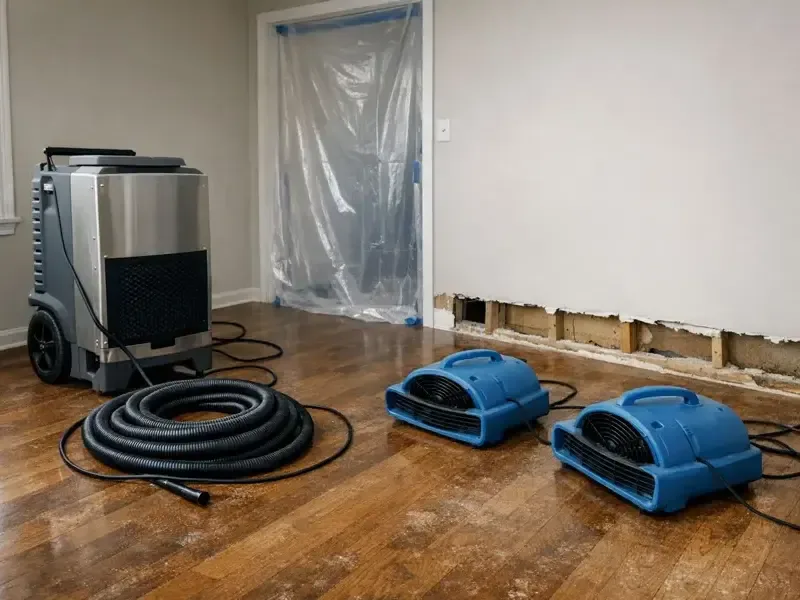
What a proper structural drying and dehumidification job takes in Superior
Surface dry is not dry
Paint, trim and carpet can feel normal while studs and subfloor stay wet, so moisture meters decide when the work is done, not touch or guesswork.
Air and dehumidifiers work together
Moving air releases moisture from materials, and dehumidifiers remove it from the room so it does not settle elsewhere.
Newer homes hold moisture
Tightly built walls dry slowly, so rebuilt and newer homes need careful, monitored drying behind the finish.
Readings prove the result
Daily logs show progress and give the insurer and repair contractor a clear dry-out record.
What to do right now about structural drying and dehumidification
- Map the moisture. Meters and thermal cameras show which walls, floors and ceilings are wet and how far the water traveled through the structure.
- Set the equipment. Air movers and dehumidifiers are placed to pull moisture from the surfaces and the open cavities.
- Monitor daily. Readings are taken on each visit and equipment is adjusted until dry goals are close.
- Confirm and remove. Final readings are recorded, and equipment is picked up only after the whole structure is confirmed dry.
What does structural drying and dehumidification cost in Superior, CO?
Drying one or two rooms often costs $1,200 to $3,000, a basement or several rooms runs $3,000 to $7,500, and large areas or dense materials that dry slowly can reach $7,500 to $20,000.
One or two rooms
- Limited area of wet materials
- Few pieces of equipment
- Shorter monitoring period
Basement or several rooms
- Multiple rooms or levels wet
- More equipment on site
- Daily readings across areas
Large or dense materials
- Hardwood, concrete or layered finishes
- Heavy equipment load
- Extended drying and records
What moves the number most:
- The water category: clean, gray or black water
- Square footage and how many levels got wet
- Material class: carpet, drywall, hardwood or a concrete slab
- How many hours passed before drying started
Ranges are typical, not a quote. The water damage cost calculator gives a closer range for your own rooms.
Structural Drying and Dehumidification, step by step
On every Superior job, moisture gets mapped before any equipment goes down, and the equipment stays until the readings say dry.
Call and plan
Describe the water event and what is wet. The crew explains what to expect from the equipment, the noise and the daily visits.
Mapping
Meters and a thermal camera locate moisture in walls, floors and ceilings so equipment goes where it will work best.
Drying and monitoring
Equipment runs continuously while readings are checked and the placement is adjusted on each visit until the dry goal is met.
Closeout
Final readings are logged, all equipment is removed and the documentation is handed over for the insurance claim and the repair work.
Removing standing water is only the start. Moisture stays in wood, drywall and concrete long after the surface feels dry. Rebuilt and newer Superior homes still need thorough drying behind finished walls after a water loss, because tight modern construction can hold moisture inside the walls for a long time, long after the surface feels normal to the touch.
How structural drying works
Air movers push dry air across wet surfaces while dehumidifiers pull moisture out of the room. Wall cavities are opened or ventilated so air reaches the framing. The crew measures moisture in drywall, studs and subfloor, compares each reading with a dry reference, and adjusts the equipment so the drying stays efficient from the first visit to the last. Each wall, floor and ceiling is tracked as its own measurement point.
- Air movers placed by surface and cavity
- Dehumidifiers sized to the room
- Moisture mapped before and during drying
- Equipment moved as readings change
Why finished walls need attention
In finished homes the water does not stay visible. It sits behind paint and trim, in insulation and at the base of studs. A wall can look fine and read wet. Small holes or removed baseboards give air a path into the cavity, and the crew checks the readings daily until the framing and drywall match dry reference materials from an unaffected part of the home.
- Baseboards removed for access
- Small ventilation holes where needed
- Cavity readings tracked daily
Water gone but walls still feel damp? Describe what happened and what is wet, and the crew will explain how the drying will be measured.
(888) 532-8620Start the measured dry-downWhen drying is finished
Drying ends when readings match dry standards, not when the room seems comfortable. The crew removes the equipment only after the final readings are recorded. That record protects the insurance claim and gives the repair contractor confidence to close walls and install new flooring without worrying about trapped moisture.
Structural drying and dehumidification across Superior and the towns nearby
Dispatch runs day and night, and the restoration team works every neighborhood listed on the service area page.
Structural drying covers ZIP 80027, including rebuilt Sagamore homes and Original Town houses, the Rock Creek neighborhoods, Calmante, Montmere at Autrey Shores and Downtown Superior buildings.
The same service nearby: structural drying and dehumidification in Thornton, Erie, Brighton.
Related water damage services in Superior
Structural Drying and Dehumidification questions, answered
Water still coming in?
Need the house dried after a water loss? Describe the damage, and the crew will explain the equipment and the readings.
(888) 532-8620 Map the dry-downHow long does structural drying take?
It varies with the amount of water and the materials involved, such as hardwood, concrete or layered finishes. The crew stops when meter readings reach dry standards, not when a set number of days has passed.
Why are fans and dehumidifiers both needed?
Fans move air across wet surfaces to release moisture, and dehumidifiers pull that moisture out of the air. Using only one of them leaves the room damp or the walls wet, and the drying takes far longer.
Is the equipment loud?
Yes, it runs continuously and can be noisy. The crew places it to dry efficiently and explains which equipment is safe to turn down overnight, and which should keep running.
Can drywall be dried in place?
Often, if it was lightly wet and has not lost strength or started to crumble. Saturated or sagging drywall is removed, and the meters show which situation applies in each wall.
Will the drying raise the electric bill?
Running equipment uses electricity, and that is part of any dry-out. The documentation of equipment and run time can support a request to the insurer for the added cost.
Why are readings recorded?
Records show that the structure reached dry standards, which protects the claim and tells the contractor when the walls can be closed and the new finishes installed.
Do newer homes dry differently?
Tight modern walls and layered finishes can trap moisture, so newer and rebuilt homes may need careful cavity drying and more frequent monitoring than older wood-frame houses.
Dry the structure and prove it with readings
Measured drying finishes the recovery, and the crew keeps the numbers that show the structure is dry.
(888) 532-8620Reach the drying crew